

Opening a food truck might come with a surprise city transportation charge approaching $16,000, according to Common Fields and Shalece Rains, the president of the food cart cooperative in Southtown.
Common Fields is now asking the Corvallis City Council to reconsider how the fee is applied.
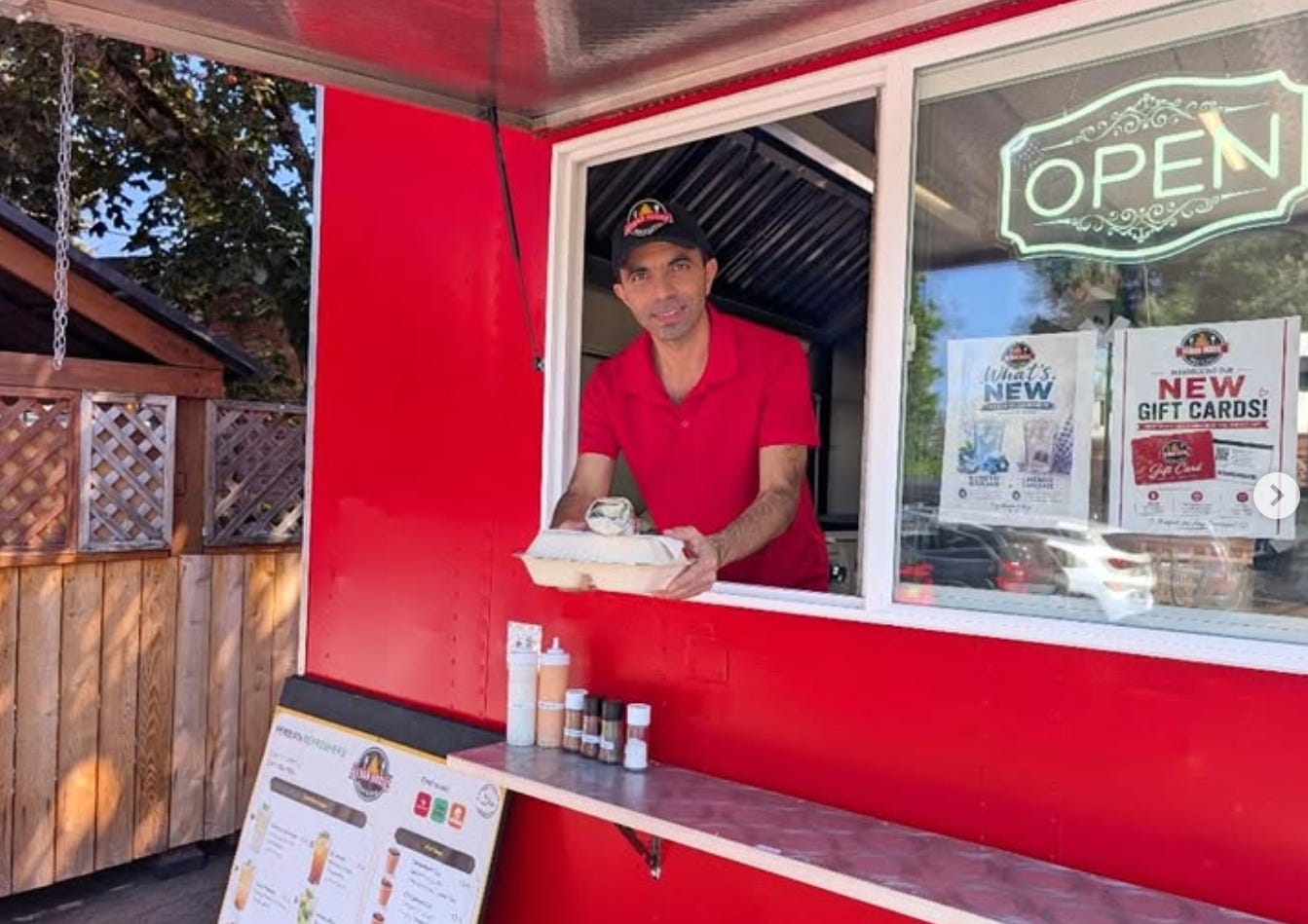
(Photo: Common Fields)
We’ve been working on this story for a bit, but the local hangout raised the issue in an Instagram post today, saying the charge is preventing new food trucks from opening and that it could force changes at its pod. It seems that the food cart cooperative in Southtown concurs.
At the center of the dispute is something called a transportation system development charge, or SDC.
The name is a bit complicated, but the idea is simple. When a new development or business is expected to place additional demand on the city’s transportation system, the city calculates that new demand and charges the applicant a one-time fee.
It instantly makes you wonder how a mostly stationary food truck can add demand to the transportation system. The only thing really being transported is good-tasting, sometimes overpriced food.
For a more traditional development, such as a new apartment building, the SDC fee can make sense. A new building brings more residents, employees, customers, and vehicles, creating additional trips on the surrounding transportation infrastructure.
A food truck is mobile, but once it begins operating regularly at a location, the city can treat it as a new use of that property. The city then estimates how many additional trips the food truck may generate during the weekday afternoon peak travel period.
That estimate is converted into a dollar amount using the city’s adopted transportation SDC rate.
The calculation works like this:
Estimated additional trips generated by the business multiplied by the city’s charge per trip equals the transportation SDC.
The city’s 2025 fee schedule charged $403.78 for each calculated trip end. That rate included $360.55 for future transportation improvements and $43.23 to reimburse the city for existing infrastructure with capacity available for growth.
At that rate, a food truck determined to generate approximately 38 additional peak-hour trip ends would face a transportation SDC of about $15,300.
This example does not mean city employees are counting 38 actual vehicles arriving at a food truck. The number is a planning estimate based on the type and intensity of the proposed use. It is intended to represent the additional demand the business is expected to place on the transportation system during the busy part of the day.
The exact amount can also depend on how the city classifies the business, what activity previously occurred on the property, and whether the applicant receives credit for trips already attributed to an existing use. Aka, you were just going to Common Fields for a beer… your travel shouldn’t be counted twice if you order from the food truck as well.
Common Fields is bringing the issue forward. They say “it may have to remove some of the trucks at its existing pod or pay approximately $30,000 in fees.”
The argument is that the charges have already held up multiple food-truck projects planned for South Corvallis, contributed to the potential closure of a South Corvallis restaurant, and placed a group of 8-10 food trucks that received grant funding from the city on hold.
We talked to Shalece Rains, the president of the food cart cooperative in Southtown, last week. She backs up what Common Fields is serving.
Shalece said the group currently includes eight member businesses, with plans to add more. The cooperative is operating under the city’s 45-day “temporary market” allowance rather than through a permanent food-cart-pod permit.
Shalece said the cooperative “has identified several obstacles, including finding a suitable property partnership, completing improvements required for a master site permit, and paying the city’s development fees.” She went on to say that “the city’s development fees all present significant challenges” and that “solutions are in the works, but it will take time.”
The group wants the future food-cart pod to “reflect South Corvallis and showcase Latino culture from within the community. Each participating family brings its own perspective on what the project and the opportunity to operate a business mean to them.”
“Our deepest hope is to land in a space where neighbors come out and spend time together,” Shalece said. The cooperative envisions a gathering place where food and frequent community events help strengthen connections among South Corvallis residents.
There is some hypocrisy here if our research is right.
Las Doñas del Sur received a $250,000 grant administered by the City of Corvallis using federal American Rescue Plan Act funding. The grant was intended to help build a community of food-cart businesses. Although the city awarded the grant, it could also collect a portion of that funding back… through the SDC fees. Essentially awarding itself some of that grant money.
It’s all based on your preferred method of accounting.
What we can confirm right now is that the city substantially revised its mobile-food-unit regulations in early 2025.
On January 21st, the Corvallis City Council approved a package of regulations expanding where food trucks could operate. Before those changes, mobile food units were largely confined to downtown.
The updated rules opened additional commercial mixed-use areas to food trucks, allowed them on the Oregon State University campus, and established regulations for food-truck pods.
Corvallis says it has collected SDCs since 1973. The city currently imposes them for transportation, water, wastewater, stormwater, and parks.
There are a lot of issues here, but the issue is not that the council just passed a new $16,000 fee aimed at food trucks. The issue is how the city’s longstanding transportation SDC is being applied to food trucks operating under the updated permitting rules.
It’s fair to view these fees as cost prohibitive to small businesses. They can create a barrier for entrepreneurs.
Common Fields has launched a petition here, which asks the city to amend the fee structure.
The business said it believes “the treatment of food trucks was an oversight within a larger regulatory package rather than an intentional attempt to discourage mobile food businesses.”
Common Fields is asking supporters to sign the petition, contact the mayor and city councilors, and attend a City Council meeting scheduled for Tuesday, September 22, at 6:00 pm.
They are also coordinating people interested in speaking at the meeting. Potential speakers are being asked to contact Jacob@commonfieldscorvallis.com.
They are now asking the City Council to rewrite the rules before existing trucks leave and additional food-truck projects are abandoned.
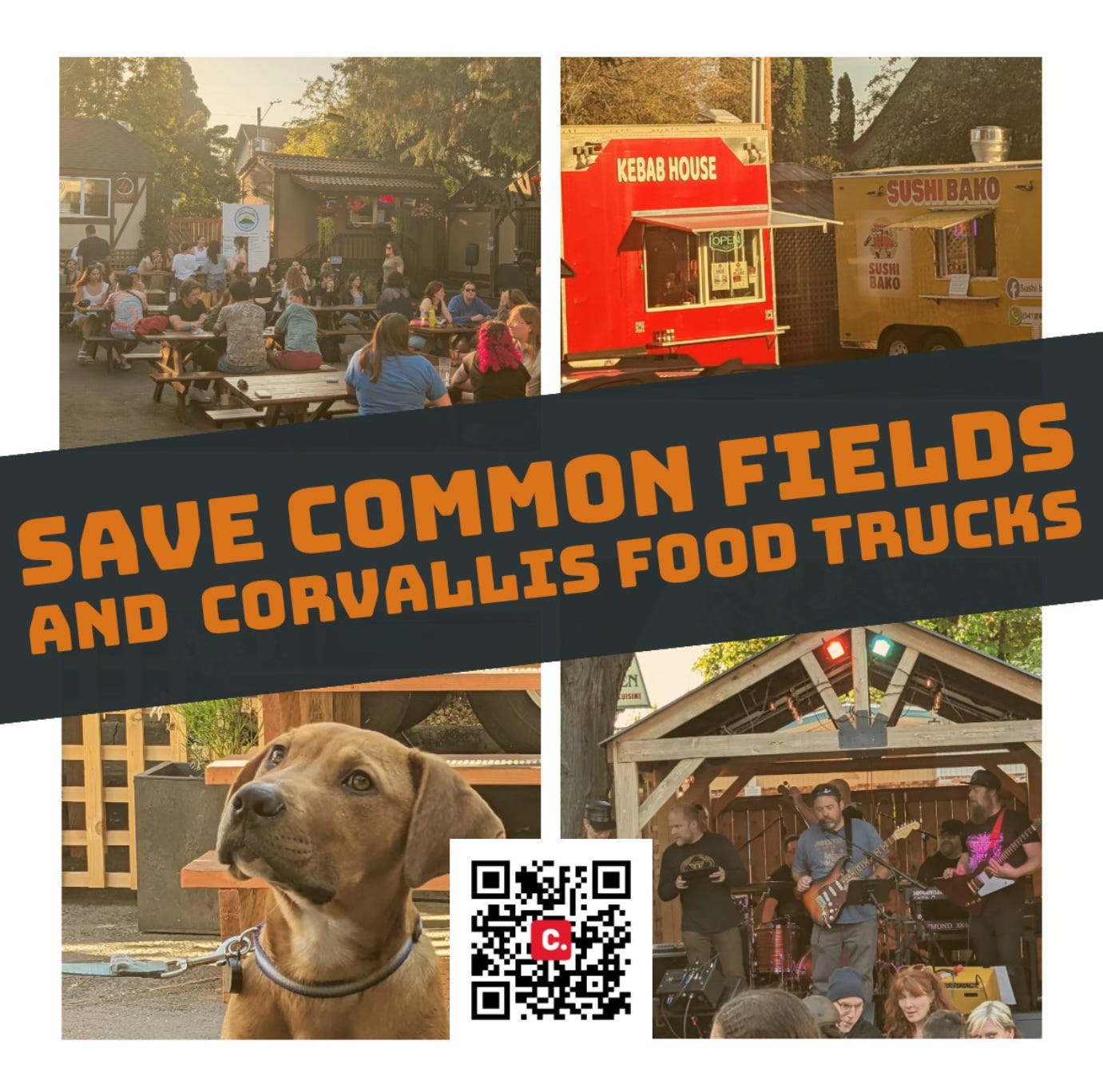
This article was written by Jackson Hayes, a contributor to The Corvallis Inquirer. Feel free to send us your stories or articles to publish at: editor@corvallisnow.com
More recent stories:


→ Donate
We’ll still keep it ad-free and paywall-free even if you don’t. 100% of donations go to expanding local reporting, giving back to community causes, and minor operating expenses. Read more about our values and mission here.

Do you have a story for The Inquirer? Email: editor@corvallisnow.com


Common Fields made a comment on their Facebook page that implied they think it might have perhaps been an oversight.
I have a different feeling: Perhaps Common Field's fellow restaurateurs in Corvallis are hunky dory (that's a technical term) with these fees because they feel that food trucks take away their business? The restaurant industry as a whole is notoriously "cut throat".
I’m sure there’s a fix somewhere just saying it is not straightforward at all as you explained in the article