

Researchers in Corvallis are starting to refine a weed-control method that sounds simple, but probably is not. Touch an unwanted plant with an electrified metal applicator and use the resulting heat to damage or kill it.
OSU weed scientist Marcelo Moretti started experimenting with electrical weed control in 2019. Seven years later, his work has grown into a larger research program involving hazelnuts, blueberries, vegetables, hops, and nursery plants.
“We found EWC was very effective,” Moretti said in a recent OSU extension post.
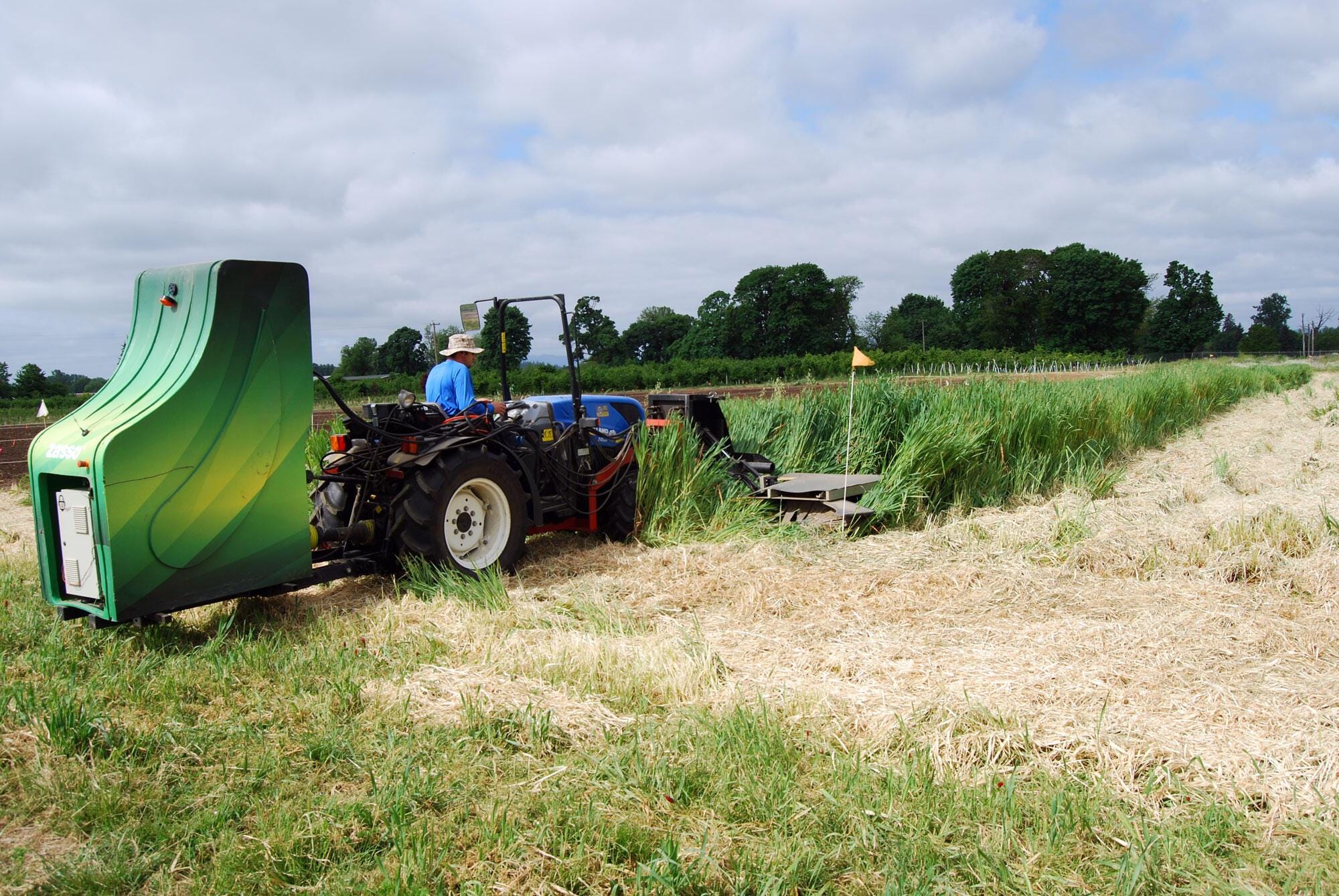
The farm-scale equipment uses a tractor-powered generator and transformer to produce high-voltage electricity. Metal electrodes make contact with weeds, sending the electrical current through the plant, damaging its cells and reaching portions of its root system.
Tilling tears up the soil. This process does not. That makes it valuable for organic farms and perennial crops, where growers have fewer weed-control options.
Some of the most recent testing took place at OSU’s Vegetable Research Farm here in town. Researchers planted oats and crimson clover, then compared mowing, electricity, and a combination of both methods.
The electrical treatment killed the oats, clover, and a large portion of the weeds growing beneath.
“It’s pretty effective at controlling the cover crop,” OSU weed specialist Aaron Becerra-Alvarez said.
(Photo: Aaron Becerra-Alvarez/OSU Extension)
There are still some limitations. The applicator must make good contact with the vegetation, and the slow operating speed could make the process expensive or impractical across a larger field. Results also depend on the weed.
In separate trials involving Canada thistle, a single electrical treatment provided 39% control in Corvallis. Two treatments increased control to 53%.
Researchers also monitored blueberry plants exposed to the weed-control program over several years. “For four years, there was no negative effect,” researcher Luisa Carolina Baccin said.
This is being developed primarily for agricultural equipment right now, but it seems to be an interesting possibility beyond commercial farms.
We had the thought that if the technology could safely be miniaturized, perhaps a smaller, hand-held version could someday be used on our lawns, garden beds, or gravel paths. It sounds better environmentally than using chemicals, and much easier than pulling all those weeds by hand.
Many technologies start as large, specialized tools before becoming smaller and practical for the mass market.
This article was written by Derek S., a contributor to The Corvallis Inquirer. Feel free to send us your stories or articles to publish at: editor@corvallisnow.com
Other local tech news:


→ Donate
We’ll still keep it ad-free and paywall-free even if you don’t. 100% of donations go to expanding local reporting, giving back to community causes, and minor operating expenses. Read more about our values and mission here.

Do you have a story for The Inquirer? Email: editor@corvallisnow.com


