

Vexil Systems, a Corvallis-based startup, has been building UAV-deployed radio repeaters that restore communications for search-and-rescue and wildland firefighting crews.
It’s basically a temporary radio tower that can fly and land in mountainous terrain.
It was just announced that they were selected for the Oregon UAS Accelerator’s Fall 2026 cohort in Pendleton. 17 startups were selected for the 12-week program. The accelerator helps early-stage companies developing drones and autonomous technologies move from prototypes toward testing and commercialization.
The Oregon UAS Accelerator is based in Pendleton for a reason. It sits in the City of Pendleton’s UAS Range, which provides access to 14,000 square miles of FAA-approved airspace. The facility has hangars, 16 drone test pads, mobile command centers, a machine shop, 3D-printing capabilities, and a UAS-friendly air traffic control tower.
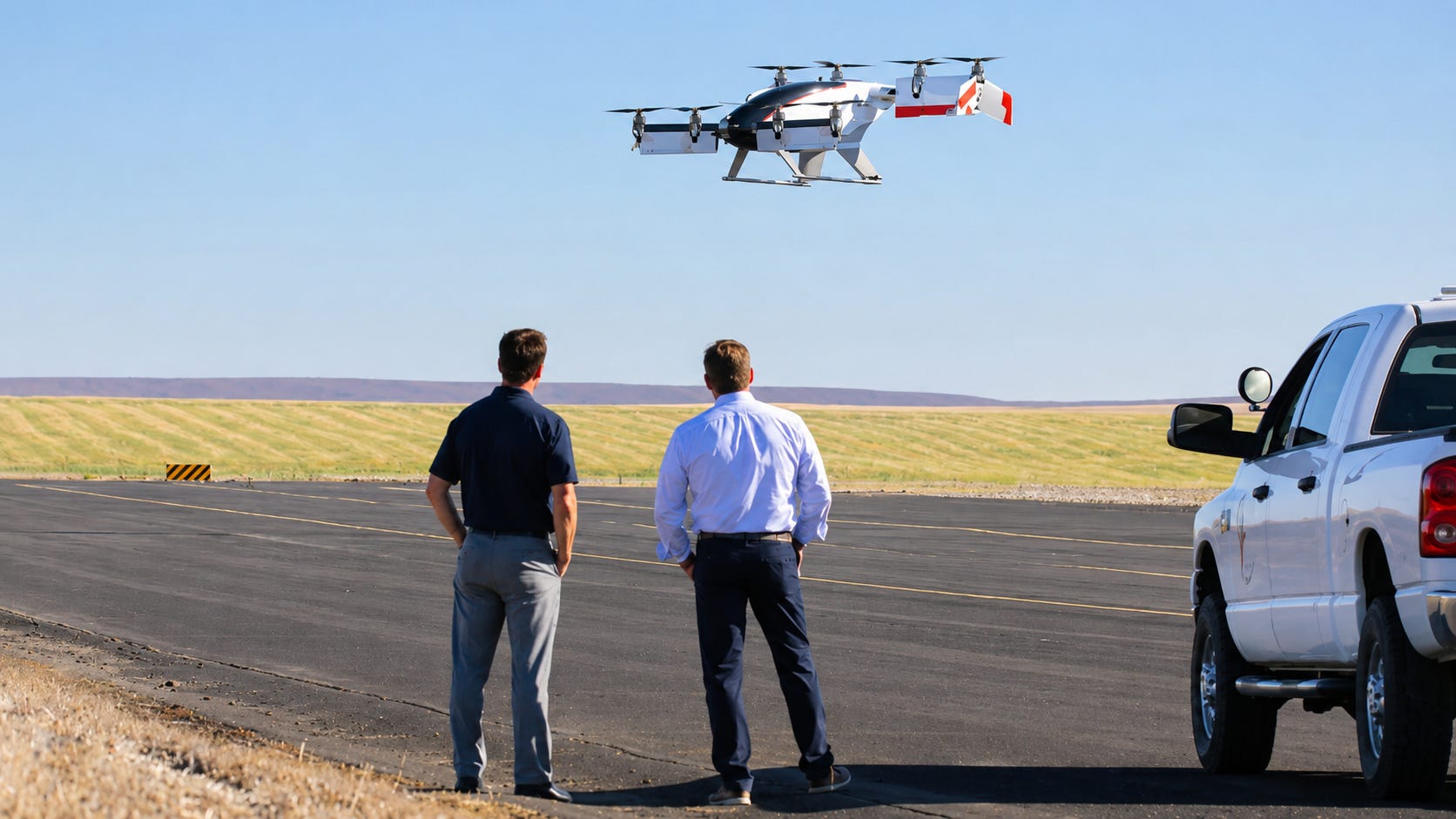
(Photo provided by: The Oregon UAS Accelerator)
Vexil’s technology could have many applicable “real-world” uses, but the one that probably hits closest to home is addressing a longstanding problem for firefighters working in mountains and other rugged terrain.
Wildland firefighters often use handheld radios, which rely heavily on line of sight. Mountains and canyons can interfere with communications, thus creating dead zones between crews working in different locations.
The consequences of communication problems during wildfires are serious.
During the Yarnell Hill Fire in Arizona, 19 members of the Granite Mountain Hotshots were killed after being overtaken by rapidly changing fire conditions. The official investigation found that “radio communications were challenging throughout the incident,” including radio dead spots being cited as one of the issues.
This year, during the Morrill and Cottonwood wildfires in southwest Nebraska, firefighters went three days without reliable radio communications despite attempts to establish repeaters. Wildland crews try to overcome these dead zones by positioning portable repeaters, antennas, and power supplies at elevated locations. This often means physically transporting the repeater to a suitable high point.
Vexil places a radio repeater aboard a drone. The aircraft can fly to an elevated location, land, and then receive and retransmit radio traffic between teams that otherwise cannot communicate directly. Landing, and not hovering, extends the battery operating life of the repeater and drone.
The company’s first prototype, called Aegis, was initially developed for search-and-rescue operations. They are now developing a second-generation aircraft called Hermes. The planned autonomous system would carry the radio repeater onboard, travel up to 10 miles, and provide approximately 45 minutes of battery life.
This technology is being developed right here in town, where its potential use feels highly relevant. We have no shortage of mountains, forests, and remote areas where reliable radio communication can become difficult during an emergency.
Hopefully, Vexil Systems new technology can help to accelerate improved wildland fire communications and keep crews safer.
More info on Vexil Systems can be found here. More about The Oregon UAS Accelerator can be found here.
This article was written by Derek S., a contributor to The Corvallis Inquirer. Feel free to send us your stories or articles to publish at: editor@corvallisnow.com
Other local tech news:


Do you have a story for The Inquirer? Email: editor@corvallisnow.com


→ Support us
We’ll keep it ad-free even if you don’t.

