

Data centers have been dominating media headlines as communities question their enormous electricity and water demands. It has had an impact on the governor’s race. Governor Tina Kotek just recently threw her support behind a statewide moratorium on new data centers, as public concern has grown.
The keyword there is “new.” New data centers.
One thing we don’t need to debate is whether or not Corvallis should be allowed its first data center. We already have one under construction.
To be fair, our data center is a bit different from other data centers in a few ways. Our data center will be a university-operated research facility, not a commercial warehouse of servers operated by Amazon, Google, Meta, or another tech company.
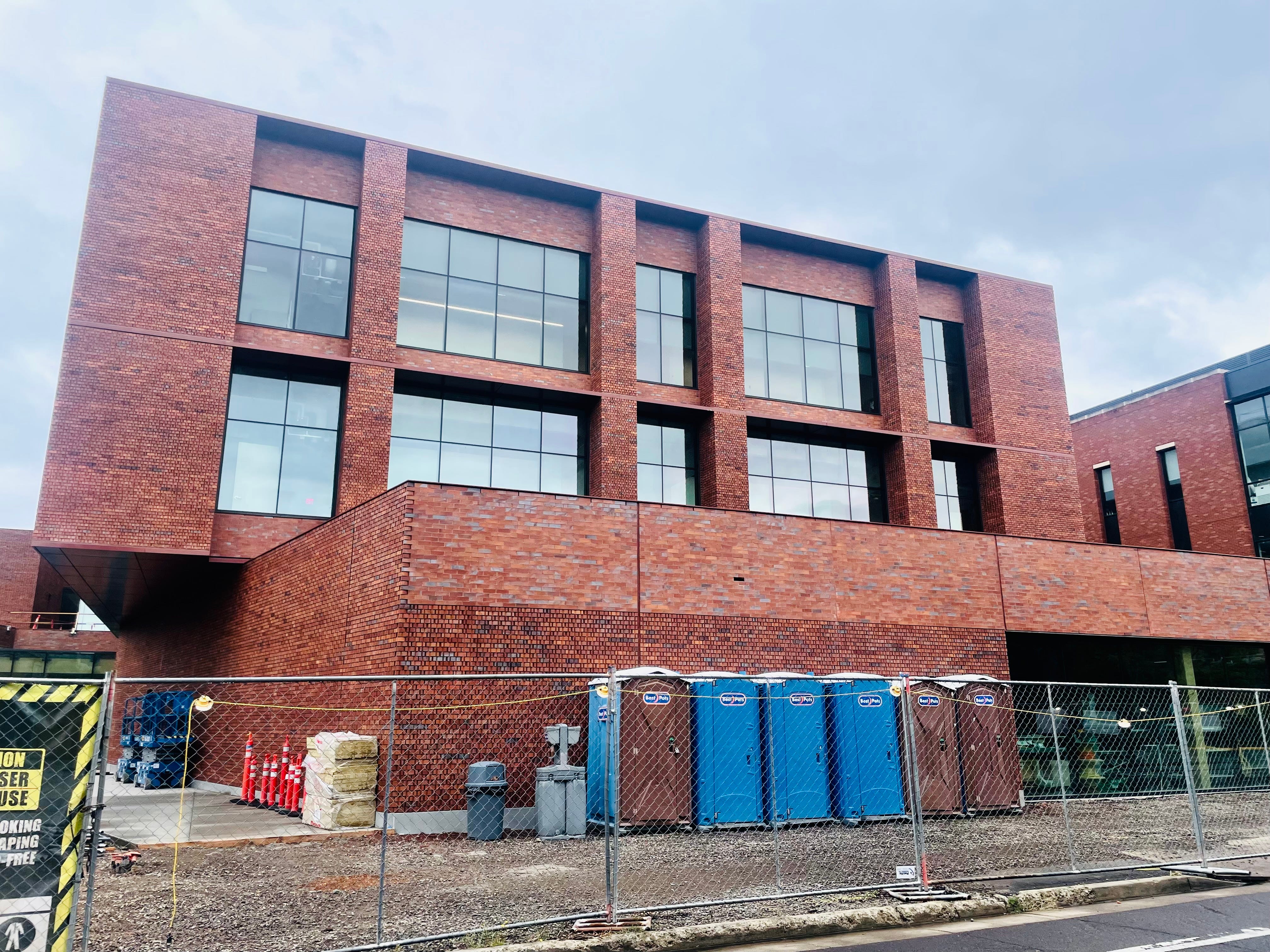
With that being said, the Huang Collaborative Innovation Complex at OSU will contain a purpose-built data center. Hardware for the data center will begin arriving in stages, and the system is supposed to go online next spring.
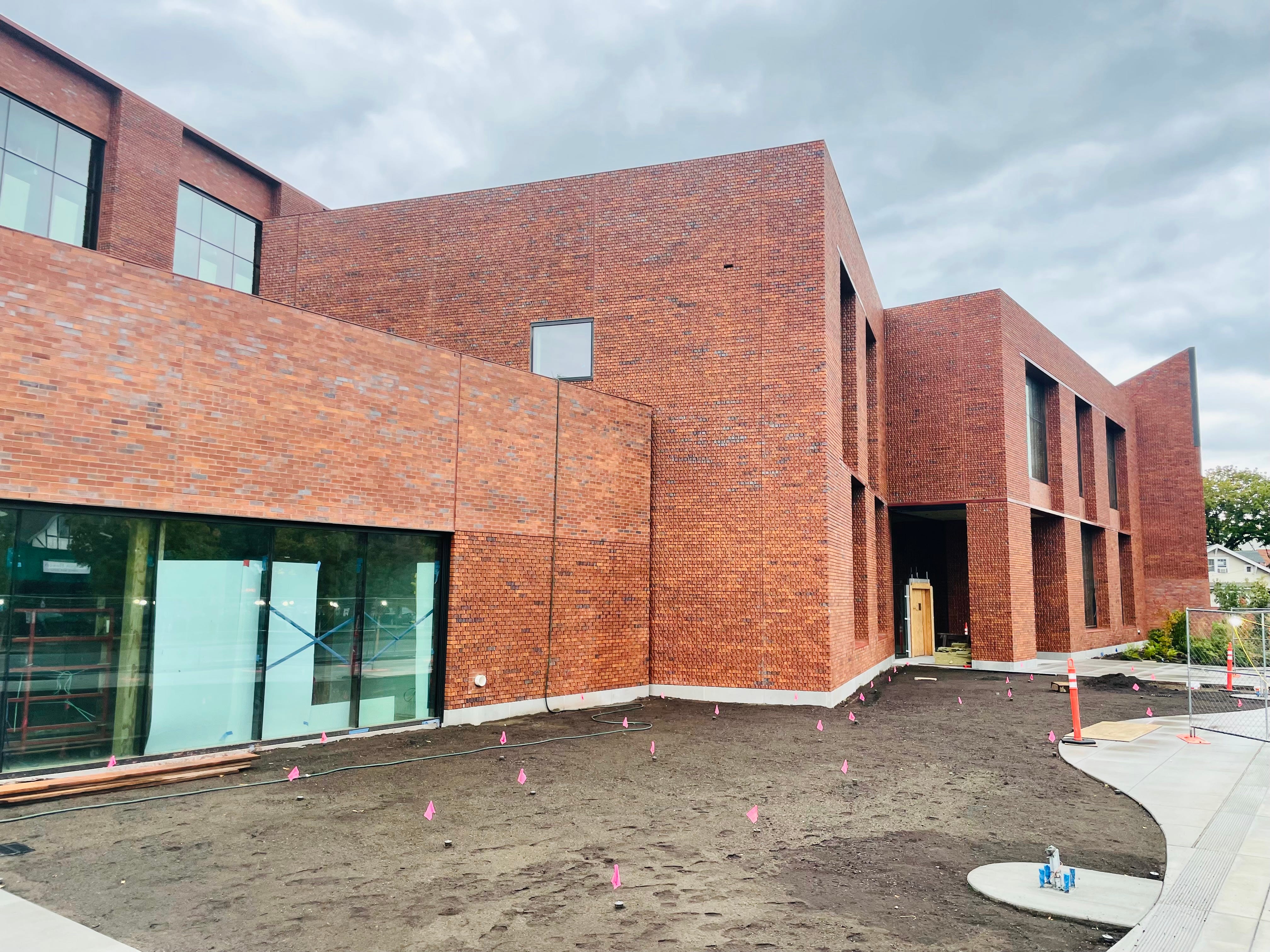
(Photo: construction at the Huang Collaborative Innovation Complex/The Corvallis Inquirer)
Just how big will this data center be to support the supercomputer?
There are two answers to that, and neither is definitive. The two numbers that matter are 1 megawatt and 2 megawatts. Megawatts (MW) mean power consumption.
In April 2023, an OSU capital forecast claims the supercomputer and data center planned for the complex would require approximately 1 MW of electrical power. In 2025, however, OSU’s Research Computing Roadmap Working Group recommended funding an increase in the Huang Complex Data Center’s electrical capacity to 2 megawatts.
This is where things get murky. It remains unclear whether OSU approved and funded the full increase. Publicly available records confirm that the 2-megawatt upgrade was recommended, but we have yet to find a budget allocation proving that it has happened.
OSU has disclosed increased funding connected to the Huang Complex, but the available records do not clearly state what that additional money will purchase. The increased funding may or may not pay for the proposed increase from 1 MW to 2 MW.
So what does the possible 2 Megawatt capacity mean?
This is one of the more surprising points of interest. There is no official Oregon government list identifying every data center, its location, and its electrical capacity.
Basically, data centers exist in Oregon that we don’t know about… or cannot readily look up.
A 2026 report prepared for the Oregon State Legislature acknowledged that no statewide source exists. Depending on the database consulted, the report said Oregon may have between 123 and 136 operating data centers.
The most detailed publicly accessible list is Cleanview’s Oregon Data Center Tracker. As of September, Cleanview identified 98 operating data centers and 36 planned facilities in Oregon.
The Huang Innovation Complex does not appear on the list, and it will have a data center, so even Cleanview’s list is incomplete.
Based on the capacities Cleanview and other industry databases publish, a 2 MW facility would rank near the bottom of Oregon’s data-center list. It is pretty small in comparison to the other centers on the list. If it were added to Cleanview’s 98 operating facilities, it would rank right around 90th.
Cleanview identifies Digital Realty’s PDX12 facility in Hillsboro as Oregon’s largest operating data center, with 119 MW of capacity. Google’s data-center buildings in The Dalles are listed at 118, 108, and 79 MW.
What does 2 Megawatt’s translate to?
Two MW means the Huang Complex data center will have access to that amount of power at a given moment. That’s a max capacity measurement of power. As a rough household comparison, 2 MW is enough electricity to supply approximately 2,000 average American homes at one time.
It does not mean the data center will draw 2 MW continuously. Its electricity use will fluctuate depending on the number and intensity of the projects running on the supercomputer.
If it did operate at its full 2-megawatt capacity every hour of the year, it would consume approximately 17.5 million kilowatt-hours annually. A kilowatt-hour is currently billed at 14.5 cents… so roughly $2.5 million a year.
Also murky, OSU has not publicly disclosed its anticipated annual electricity use, electricity cost, or average operating load.
The supercomputer and its supporting data center will be used for artificial intelligence, machine learning, scientific simulations, digital twins, data analysis, and advanced visualization.
OSU also intends for the Huang Complex to support private industry, corporate partnerships, and the commercialization of university research. The university has not yet publicly provided a final opening date or anticipated annual electricity consumption.
The one thing we do know is that Corvallis will have roughly the 90th-largest operating data center in the state within the next year.
This article was written by Brian Lindensmith, a contributor to The Corvallis Inquirer. Feel free to send us your stories or articles to publish at: editor@corvallisnow.com
More recent stories:


→ Donate
We’ll still keep it ad-free and paywall-free even if you don’t. 100% of donations go to expanding local reporting, giving back to community causes, and minor operating expenses. Read more about our values and mission here.

Do you have a story for The Inquirer? Email: editor@corvallisnow.com


