

A city’s main values are pretty easy to articulate. Most of the time. Political candidates articulate them in their campaign platforms all the time. Those values become much more difficult to reconcile when changes are proposed to the neighborhood.
Some of our neighborhoods have a lot of tension building up from all of the proposed changes on the way.
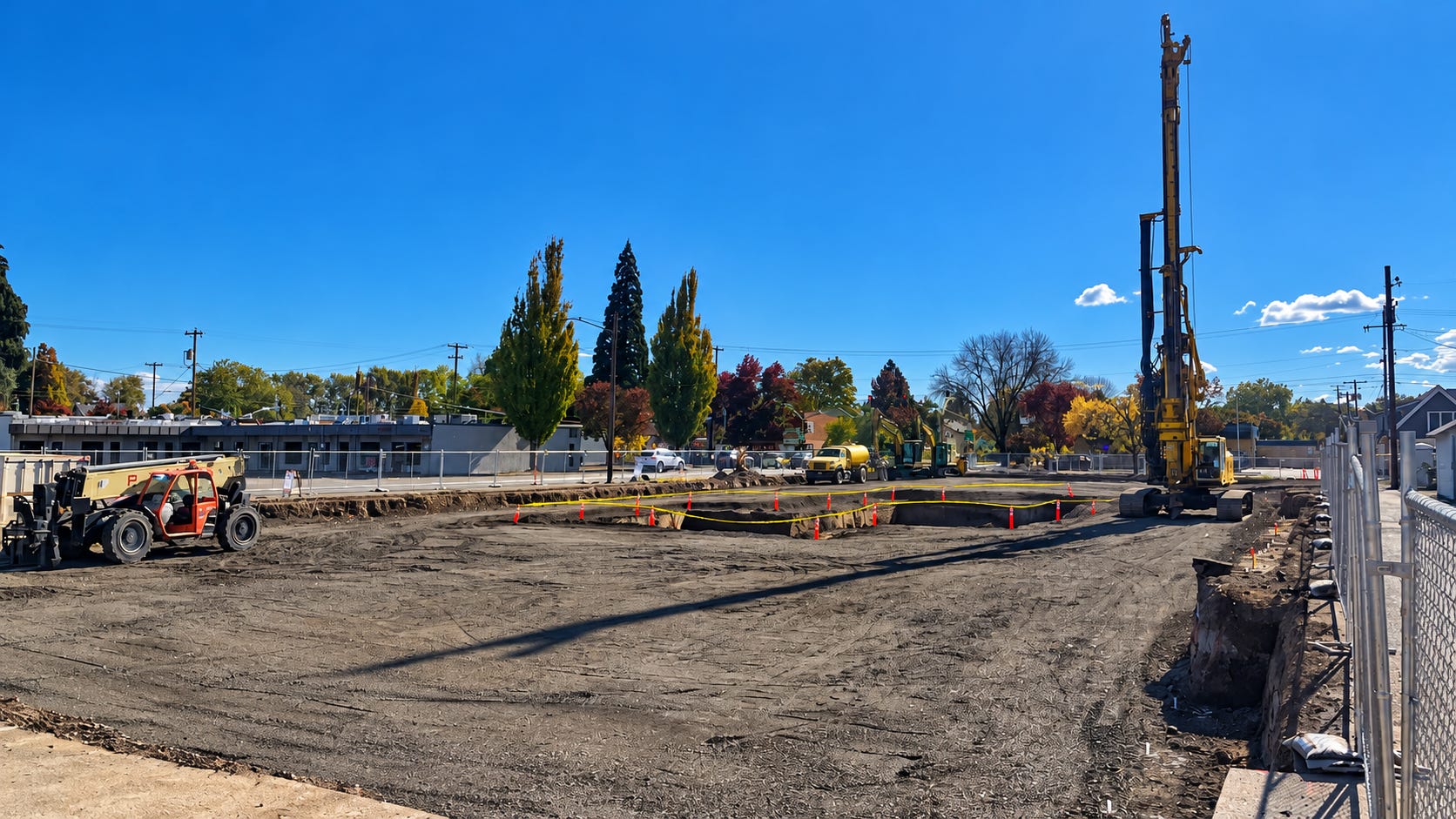
(Photo: “14-story Corvallis” 4th and Washington/The Corvallis Inquirer)
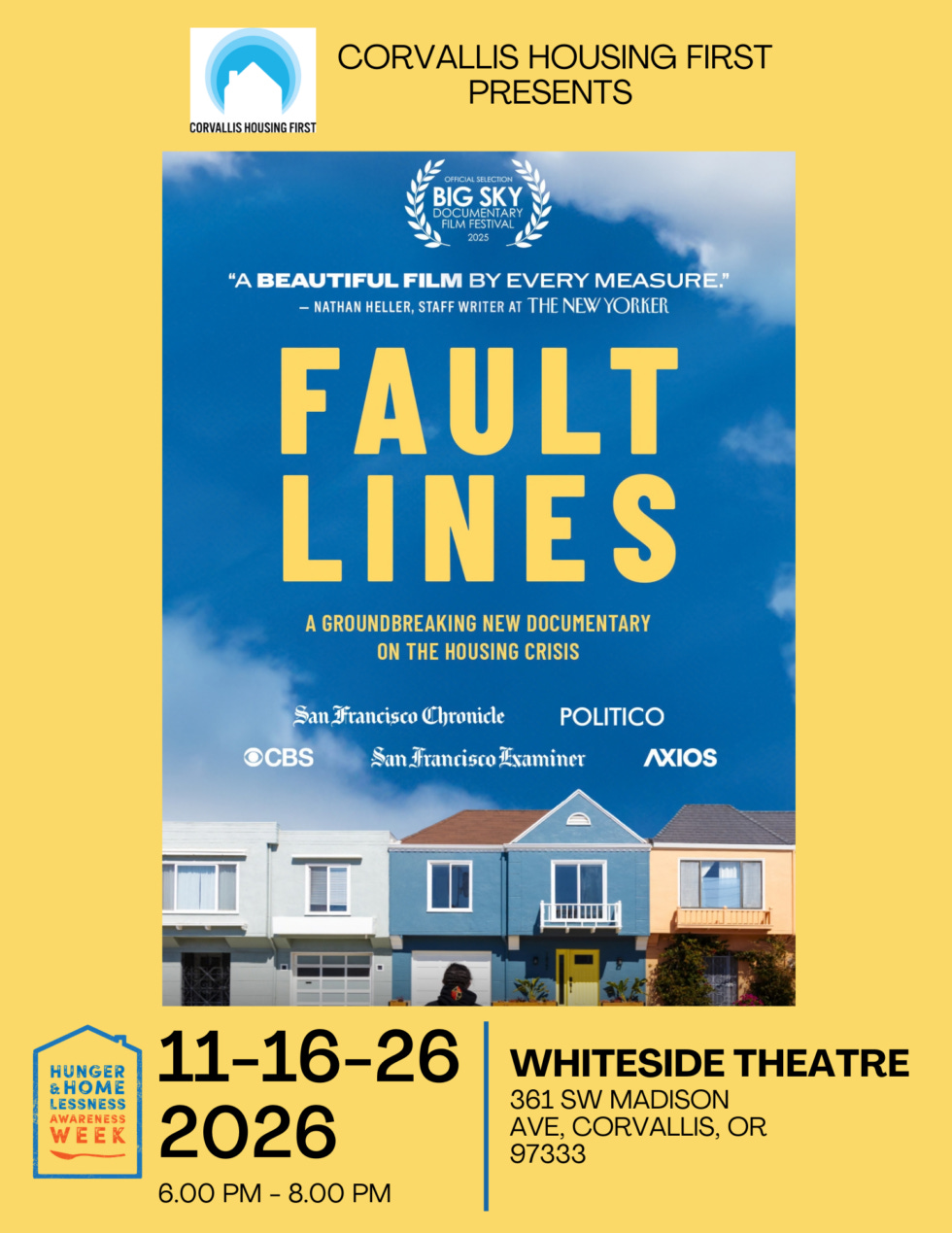
Those tensions will come to the big screen at Whiteside Theatre on Monday, November 16th, when Corvallis Housing First hosts a screening of Fault Lines, a documentary that examines the political, bureaucratic, and profoundly human dimensions of the housing crisis.
The screening will be followed by a bonus discussion with Corvallis Housing First Executive Director Andrea Myhre and a guest speaker about the film’s local and statewide implications.
Fault Lines, directed by Nate Houghteling and Yoav Attias, approaches San Francisco’s housing predicament through three intersecting narratives: a single father seeking stable housing, an activist pursuing legislative change, and a neighborhood group resisting a proposed development.
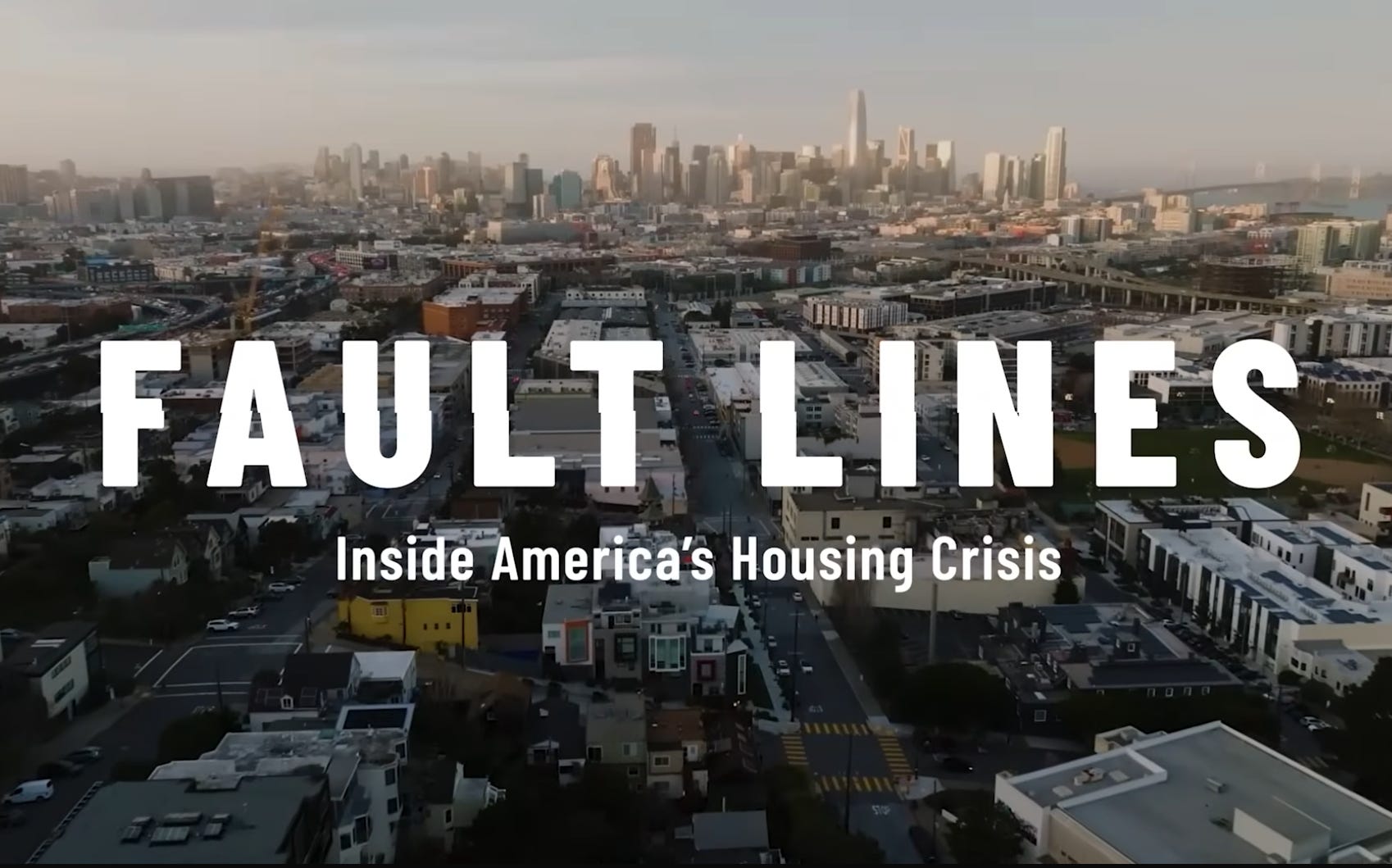
While the film focuses on these issues in a different city, all three narratives can be easily applied to our own. I know we’ve had direct discussions with activists and neighborhood groups resisting a project.
This film seems to bring a technical subject into intimate focus. Planning procedures, zoning restrictions, and ballot measures become consequential forces in people’s lives. Together, these stories examine how the aspiration to provide housing encounters the institutional machinery governing its construction.
This is one of the reasons we choose to constantly report on planning commission decisions and those RMU zoning change submissions. It’s the machinery behind the government mechanisms to build more affordable housing. If it ends up being affordable, that is…
The published reception of Fault Lines includes an endorsement from New Yorker staff writer Nathan Heller, who described it as “lucid, useful, fair-minded, engrossing, and above all humane.”
In the San Francisco Chronicle, G. Allen Johnson’s reporting explored the filmmakers’ effort to make a seemingly intractable crisis comprehensible. Comprehensible by way of understanding the mechanisms of scarcity, and how that may help audiences recognize where intervention is possible.
Using Census estimates, the city reports that 22% of Corvallis families could not afford the rent for a two-bedroom, and about a third could not afford a three-bedroom apartment.
Affordability helps determine who can remain here, establish a household, and participate in the city’s future. It can also dictate the number of people who work here but do not live here.
If that sounds familiar, it’s because AFSCME bargaining-team member Bailey Adams raised the same issue at the October 5th City Council meeting, saying only about a third of the city union’s workers live in the city they serve.
Fine, Corvallis and San Francisco differ in scale. But the screening is being held here because it invites a shared question. How does a community reconcile its attachment to familiar surroundings with the needs of people seeking a place within them?
Traffic, infrastructure, displacement, and affordability require examination. So does the cumulative consequence of delay.
The deeper dilemma in all this is one of civic belonging. Existing residents can defend a neighborhood they know. People priced out of that neighborhood… have a less tangible presence in the deliberation.
The discussion following the Fault Lines screening might offer us an opportunity to consider that asymmetry.
Registration and event details are available through Corvallis Housing First’s screening listing.
This article was written by Derek S., a contributor to The Corvallis Inquirer. Feel free to send us your stories or articles to publish at: editor@corvallisnow.com
More recent stories:


→ Donate
We’ll still keep it ad-free and paywall-free even if you don’t. 100% of donations go to expanding local reporting, giving back to community causes, and minor operating expenses. Read more about our values and mission here.

Do you have a story for The Inquirer? Email: editor@corvallisnow.com


