

Finn and Elise are two Purple Martins who left the Oregon coast in August, carrying tiny tracking devices and an itinerary that would exhaust most frequent flyers.
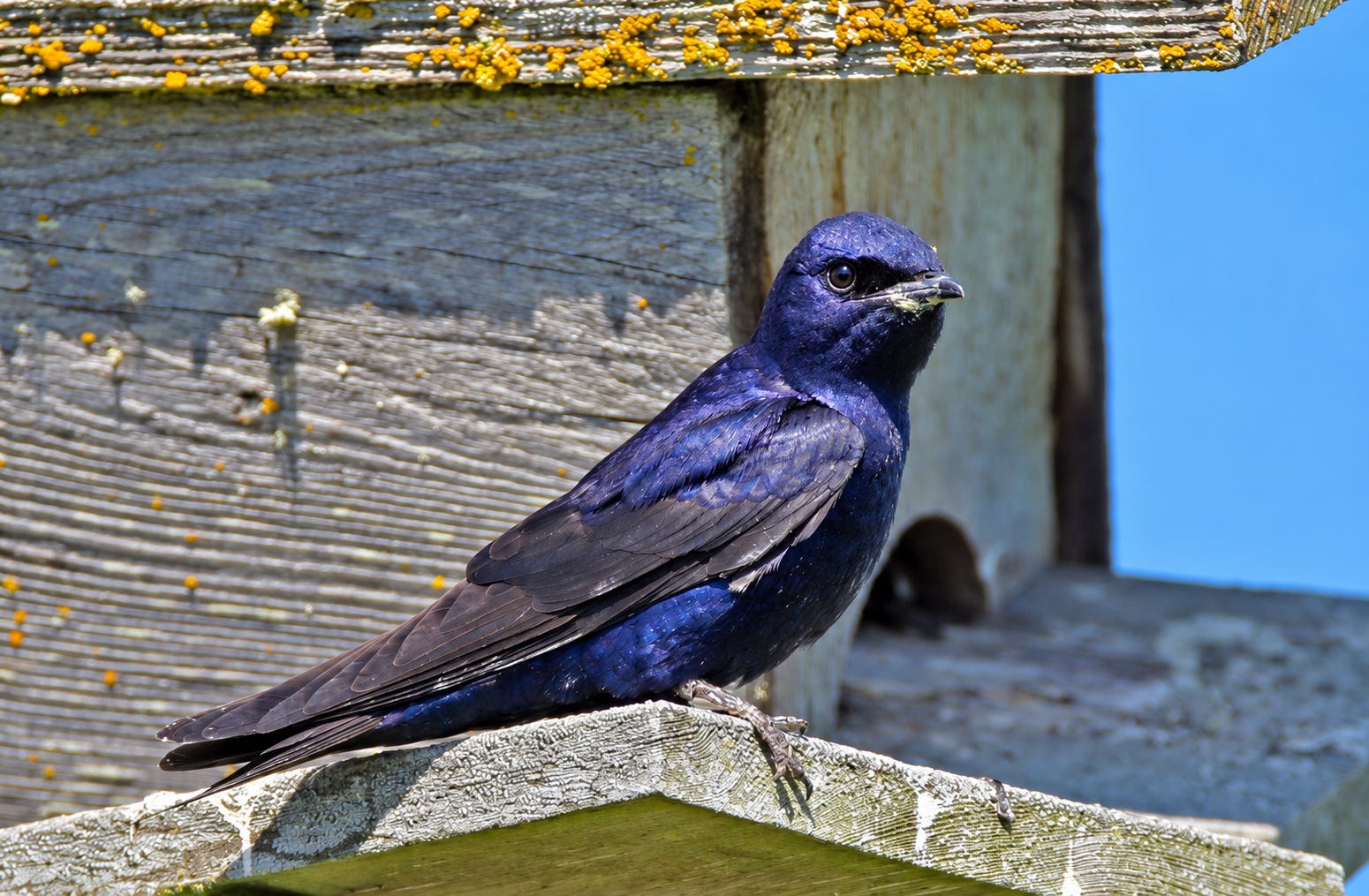
(Photo: Western Purple Martin courtesy Oregon State Wildlife Action Plan)
These two birds are giving researchers (and the general public) an awe-inspiring look at their separate but together southward journey.
Elise is an adult female tagged near Waldport, Oregon. Finn is a younger male tagged on the North Fork of the Siuslaw River, just south of Yachats. They were tagged roughly 25 miles apart at the start of their journey.
Both of these birds began migrating in August, one day apart. Both birds flew 1,500+ miles. Both birds followed a similar route along the eastern side of the Sierra Nevada. By the project’s September 15 location update, both birds had been detected within blocks of each other in La Reforma, about 40 miles north of Culiacán, Mexico.
Wild.
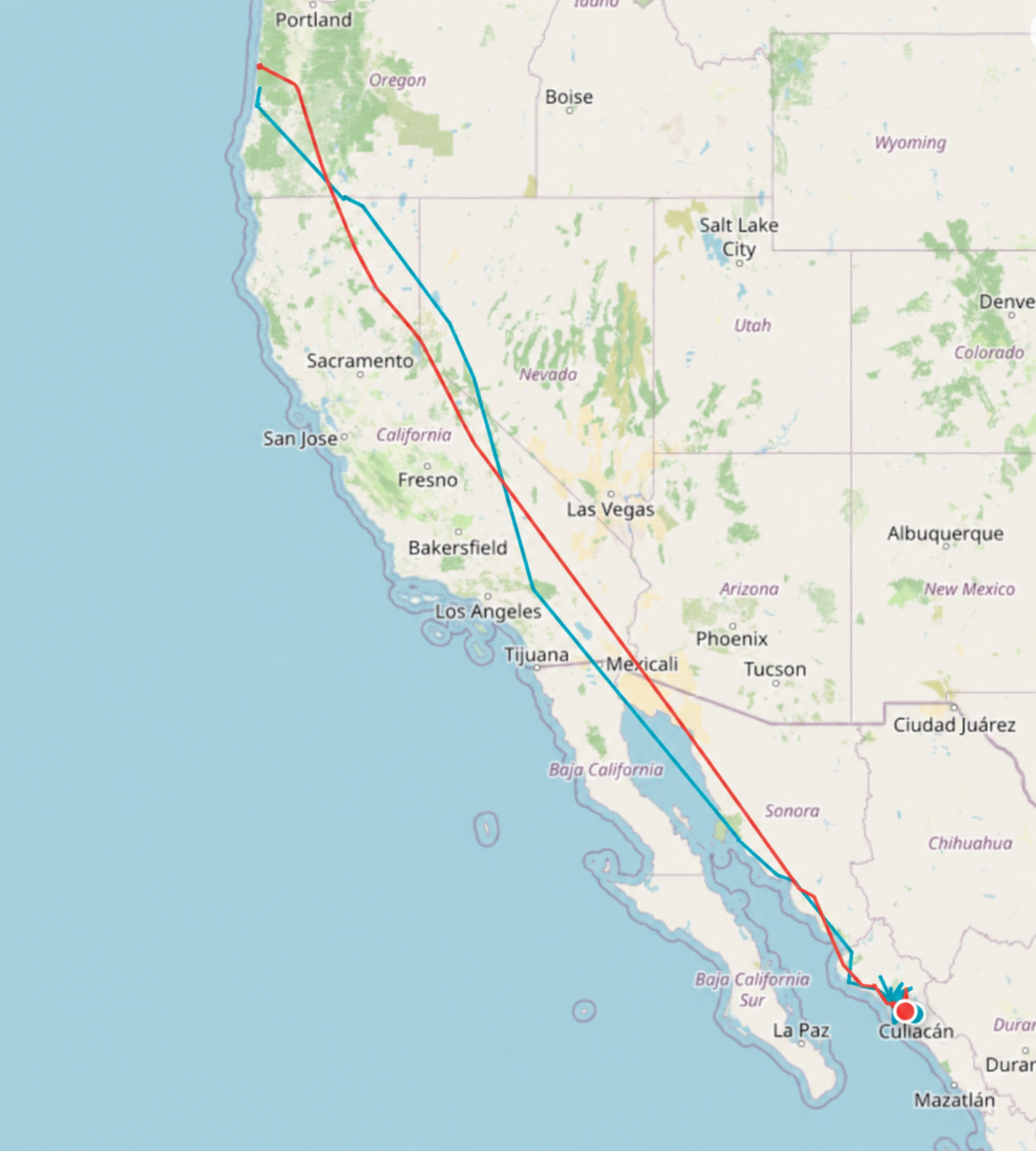
(Photo: flight path of Finn and Elise/Seven Capes Bird Alliance)
The project is a partnership between Seven Capes Bird Alliance’s Swallows in Flight to Yachats program, known as SWIFTY, and Klamath Bird Observatory.
Founded in 2005, Seven Capes works to protect birds, wildlife, and their habitats through education, conservation, and community science. Their work includes public bird walks, classroom education, and coastal habitat protection.
Elise covered approximately 1,500 miles from Oregon to Guasave, Mexico, in six days. Finn took seven. Their tiny little carry-on luggage makes the project possible. Each bird wears a solar-powered BluBird tag that broadcasts signals detectable by compatible receivers and participating smartphones.
This type of tracking allows researchers to follow detections without waiting for the birds to return to Oregon. Finn and Elise are the first Western Purple Martins to be tracked this way.
Earlier tracking methods required researchers to recapture returning birds and retrieve stored GPS data. That work revealed a migration of nearly 7,000 miles to southeastern Brazil. Seven Capes describes the anticipated journey as approximately 8,000 miles, but Finn and Elise’s complete routes remain to be seen.
“Before this study, we did not know where purple martins from Oregon went during migration and winter,” Sarah Rockwell, Klamath Bird Observatory’s senior research biologist, said in an earlier account of her tracking research published by Kalamazoo College.
The stakes extend beyond this following of two feathered travelers. The western subspecies has an estimated population of only about 3,500 breeding pairs. Identifying its wintering grounds and migration stops can help researchers determine which habitats need protection.
Readers can follow Finn and Elise through Seven Capes’ tracking page, or fly all the way to Brazil, to potentially end up blocks apart. Unlike them, we will need a passport… and a considerably larger carry-on.
This article was written by Brian Lindensmith, a contributor to The Corvallis Inquirer. Feel free to send us your stories or articles to publish at: editor@corvallisnow.com
More recent stories:


→ Donate
We’ll still keep it ad-free and paywall-free even if you don’t. 100% of donations go to expanding local reporting, giving back to community causes, and minor operating expenses. Read more about our values and mission here.

Do you have a story for The Inquirer? Email: editor@corvallisnow.com


