
Lee Eckroth has spent more than two decades working in real estate, investment, and property redevelopment. He is a prominent figure in shaping downtown, leading the renovation of several historic commercial buildings and helping bring new businesses into the city’s core.
Among the properties Eckroth owns or has helped revitalize are The Plaza, The Square, 5th & Monroe, and the buildings that house Koriander, Runway Fashion Exchange, Guardian Games, and Grass Roots Books.
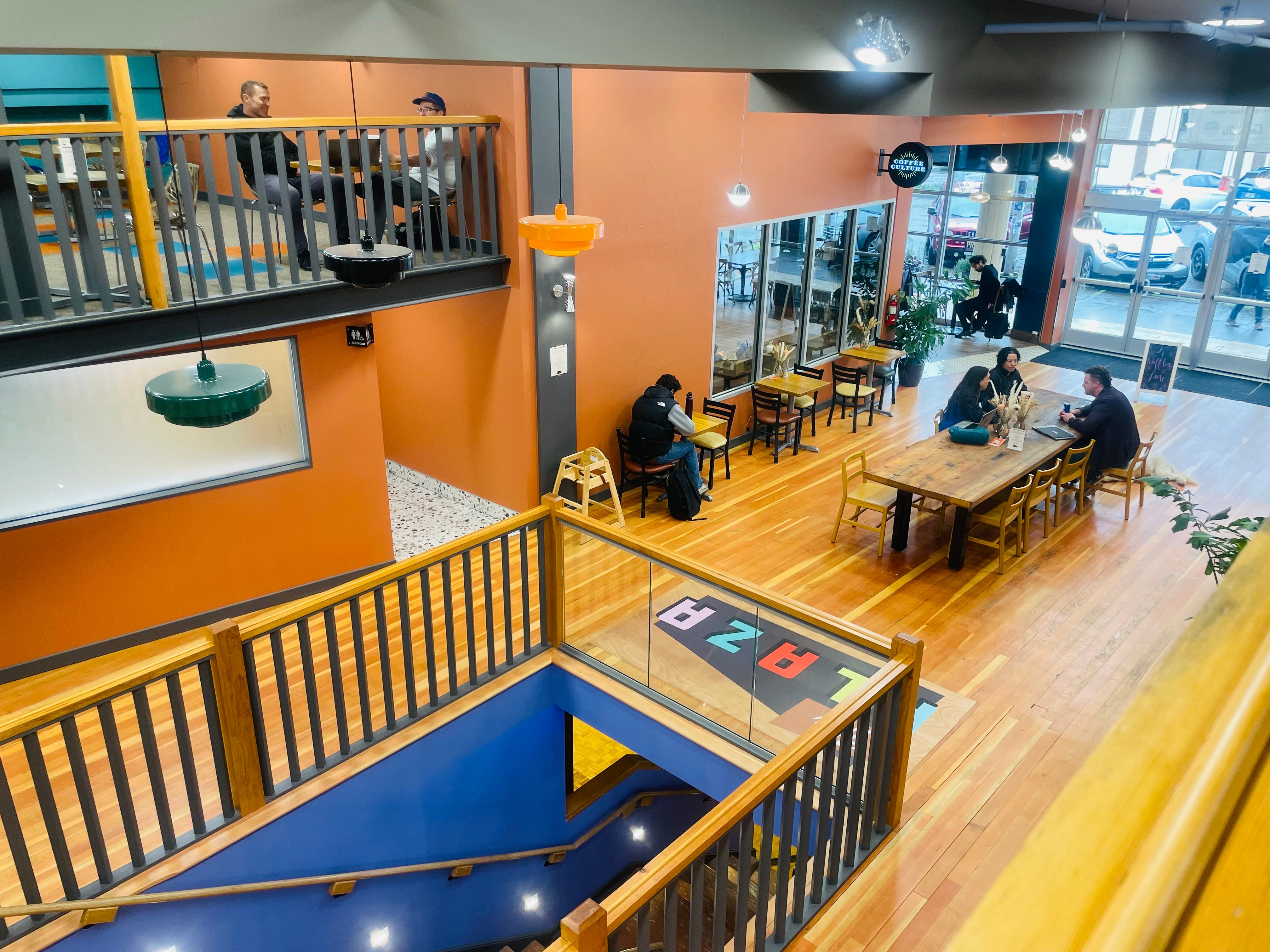
While his projects are primarily investment-driven, investing in downtown is what we need… and Eckroth has done just that. Eckroth recently shared a post in the “Downtown Corvallis Business” Facebook group.
“I’ve spent four years studying downtown. One of my primary questions is what makes Corvallis’ downtown different in the summer compared to other university towns with water adjacent (lake or river) in such a way that the downtown dramatically slows down except on Saturday mornings with farmers market. Primary answer is we are not ‘connected’ to the river. We need more connection to the river.”
Eckroth is right. Downtown is not well-connected to the Willamette River. While the city has Riverfront Commemorative Park, the waterfront remains separated from the downtown core by roadways, parking areas, and a limited number of river-oriented destinations.
Sure, our river is a little different. Along much of Riverfront Commemorative Park, there is a significant elevation drop from the park down to the water. It doesn’t flow at street level or directly through downtown. Still, there are opportunities to better incorporate the river into the city’s infrastructure.
Other Oregon cities have embraced their rivers as economic engines.
In Bend, the Deschutes has become the centerpiece of the city. Residents and visitors float the river each summer, relax on beaches, paddle, kayak, and surf at the Bend Whitewater Park.
Hood River has taken a similar approach. The Columbia River waterfront has evolved into one of the nation’s premier destinations for windsurfing, kiteboarding, boating, and paddle sports. Public beaches, waterfront parks, trails, boat launches, and event spaces draw thousands of visitors each year.
Example 1: Bend has continued expanding river access through projects like the recently completed Miller’s Landing River Access and Restoration Project, which improved public access while restoring habitat and creating new recreation opportunities.
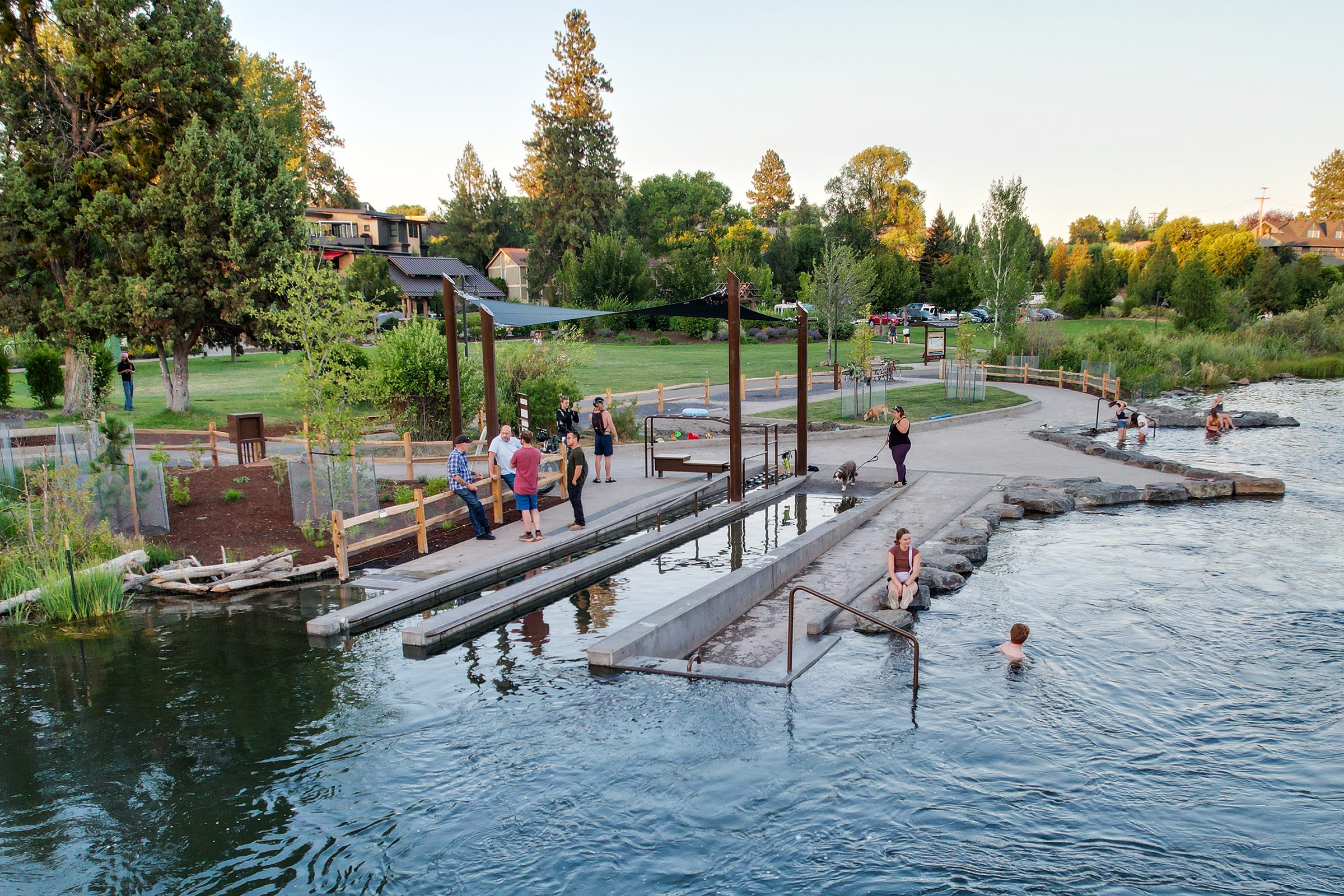
(Photo: Millers Landing River Project in Bend Oregon / City of Bend)
Example 2: The Drake Park Boardwalk added an elevated boardwalk along Mirror Pond, wider multi-use trails, an expanded beach, new gathering plazas, ADA-accessible pathways, and improved connections between downtown, nearby parks, and the Deschutes River Trail.
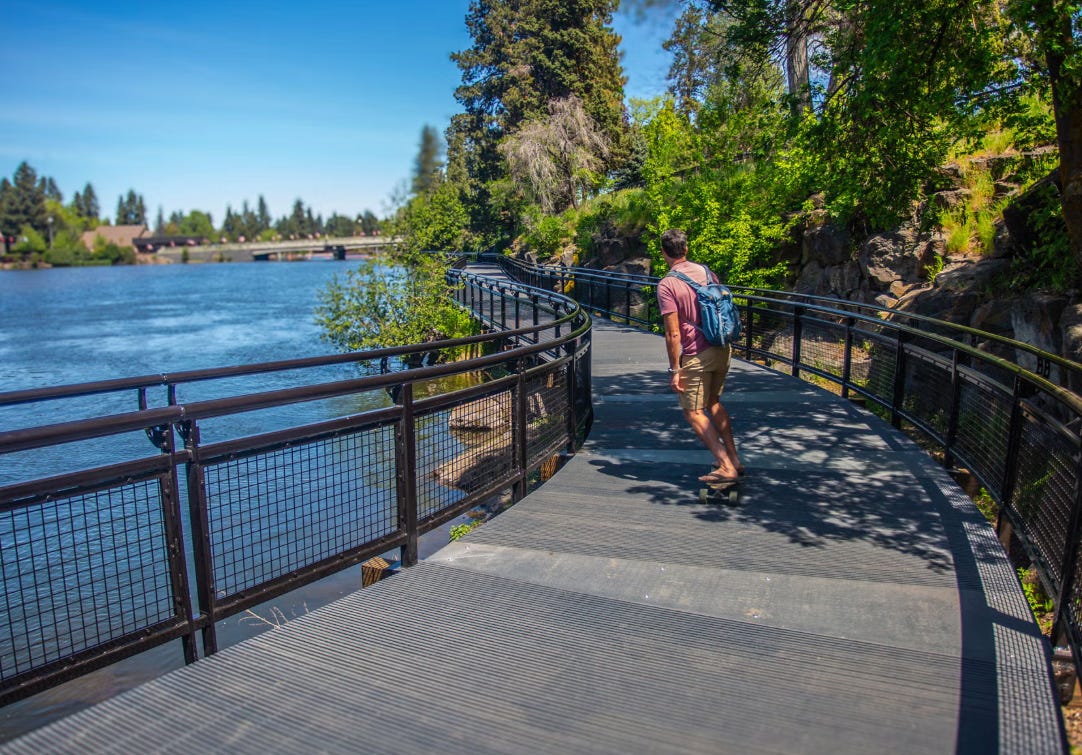
(Photo: Drake Park Boardwalk Project / City of Bend
Example 3: Hood River is looking to strengthen the connection between its downtown and the Columbia River. The Port of Hood River is exploring a reimagining of its marina district with concepts that include a public market, event spaces, waterfront restaurants, a pedestrian promenade, and recreation-focused amenities such as gear storage and saunas.
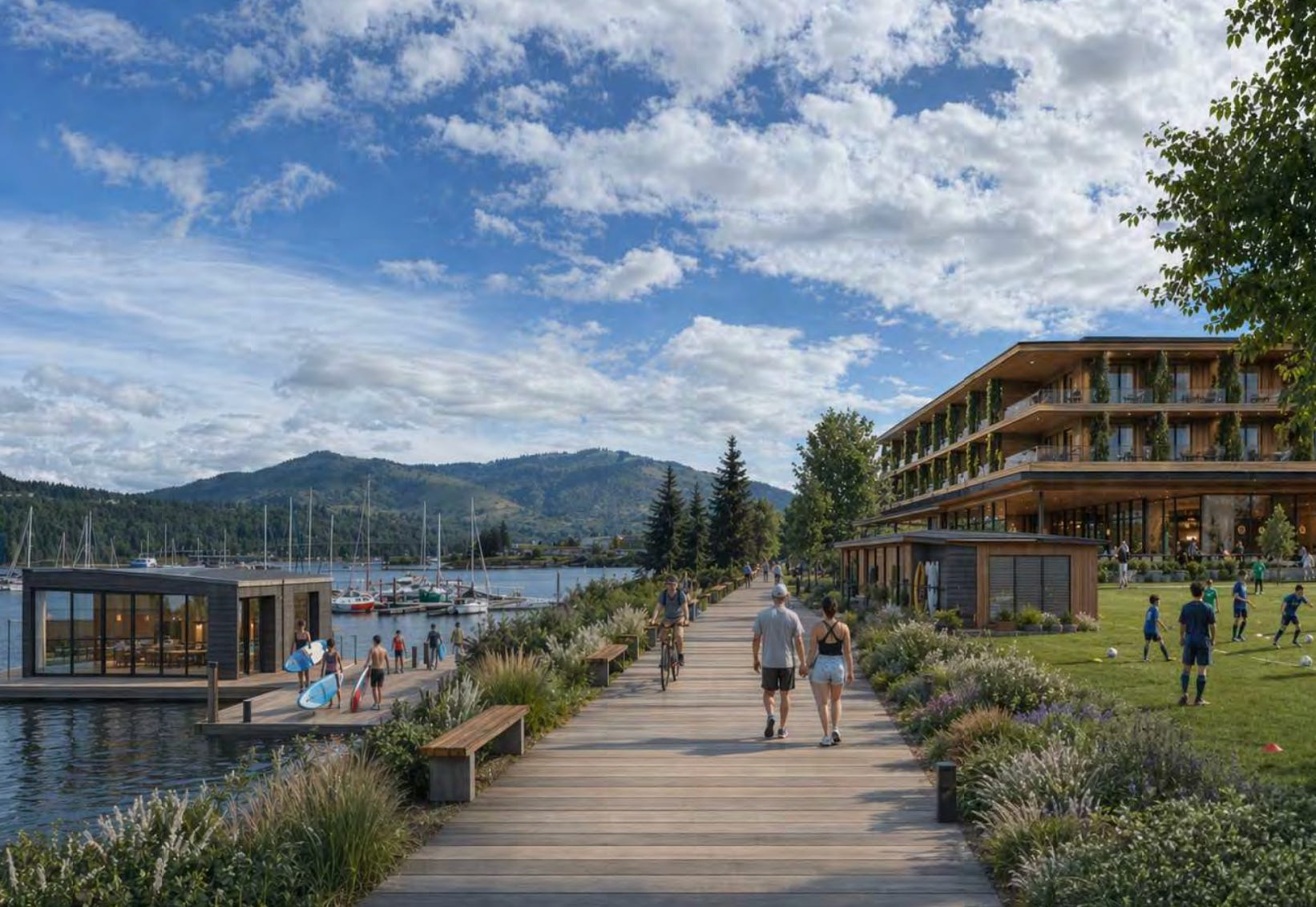
(Photo: A conceptual rendering of the Hood River Marina Project / CMLK Development)
The Willamette River’s recreational activity in our town occurs outside of our city’s commercial center. These examples above can show how greater river connectivity encourages both residents and visitors to spend more time downtown during the summer months. Bringing in tourism and revenue for businesses downtown, which in turn creates revenue for the city.
The Elephant In The Room
The City of Corvallis is evaluating a near-$200 million plan to redevelop its aging municipal buildings and construct a new central police station, amongst other facilities. We aren’t saying these facilities don’t need the upgrade, and we aren’t experts on the cost of development.
But what if those upgrades could be accomplished on a smaller scale? Instead of an all-or-nothing approach, the city could pursue a more modest campus with targeted renovations, strategic additions, and a reduced overall footprint. If the project budget were trimmed by 40%, freeing up roughly $80 million, would residents rather see those funds invested in better connecting downtown to the Willamette River? It's a question worth asking: would enhancing one of Corvallis' greatest natural assets provide more long-term value than building a larger civic campus?
This deserves further research. Maybe Lee Eckroth has some ideas. We’ll dive deeper in a future write-up.
This article was written by Brian Lindensmith, a contributor to The Corvallis Inquirer. Feel free to send us your stories or articles to publish at: editor@corvallisnow.com
Do you have a story for The Inquirer? Email: editor@corvallisnow.com


→ Support us
We’ll keep it ad-free even if you don’t.


Just look at Independence with an amphitheater next to the river, Albany also. But we do have steep banks so you’d have to go north by Spaghetti factory to do much
I agree with Lee. Another city to look at in comparison (university town, comparable population, river access) is Missoula, Montana. They are much more proactive about river access points, including how they connect to nearby businesses. Floating the Clark Fork with friends and then walking directly into town to grab lunch on a Sunday is such a treat! I feel like we could do something similar on the Willamette.
https://destinationmissoula.org/downtown-river-map