
Let’s get back to gossip, rumor, and the theoretical spectrum. But also back it up with some interesting parallels.
We live-transcribed and fed over 16,000 words from the City Council Candidates Forum on Wednesday. There were some interesting snippets of information in there, but we homed in on one particular snippet from the current Mayor Charles Maughan.
The moderator’s question was, “How do we address empty downtown storefronts?”
Maughan said, “One of the issues we have downtown is that we have one property owner who owns a lot of businesses and does not rent to businesses that want to rent that space.” He continued, “They’re selling that building. That’s going to be good for downtown.”
Maughan didn’t identify the property owner during his answer, but there is one obvious stretch of downtown that he was talking about. A row of vacant commercial buildings at 316, 320, 324, 328, 334 SW Second Street. A row of buildings that sit near the center of downtown.
A parcel search through Benton County's official assessor portal shows the properties are connected to the Blackledge Property Company and owned by Nancy Wike.
Nancy Wike is the president of Blackledge. She is also listed as the owner of the vacant Second Street properties.
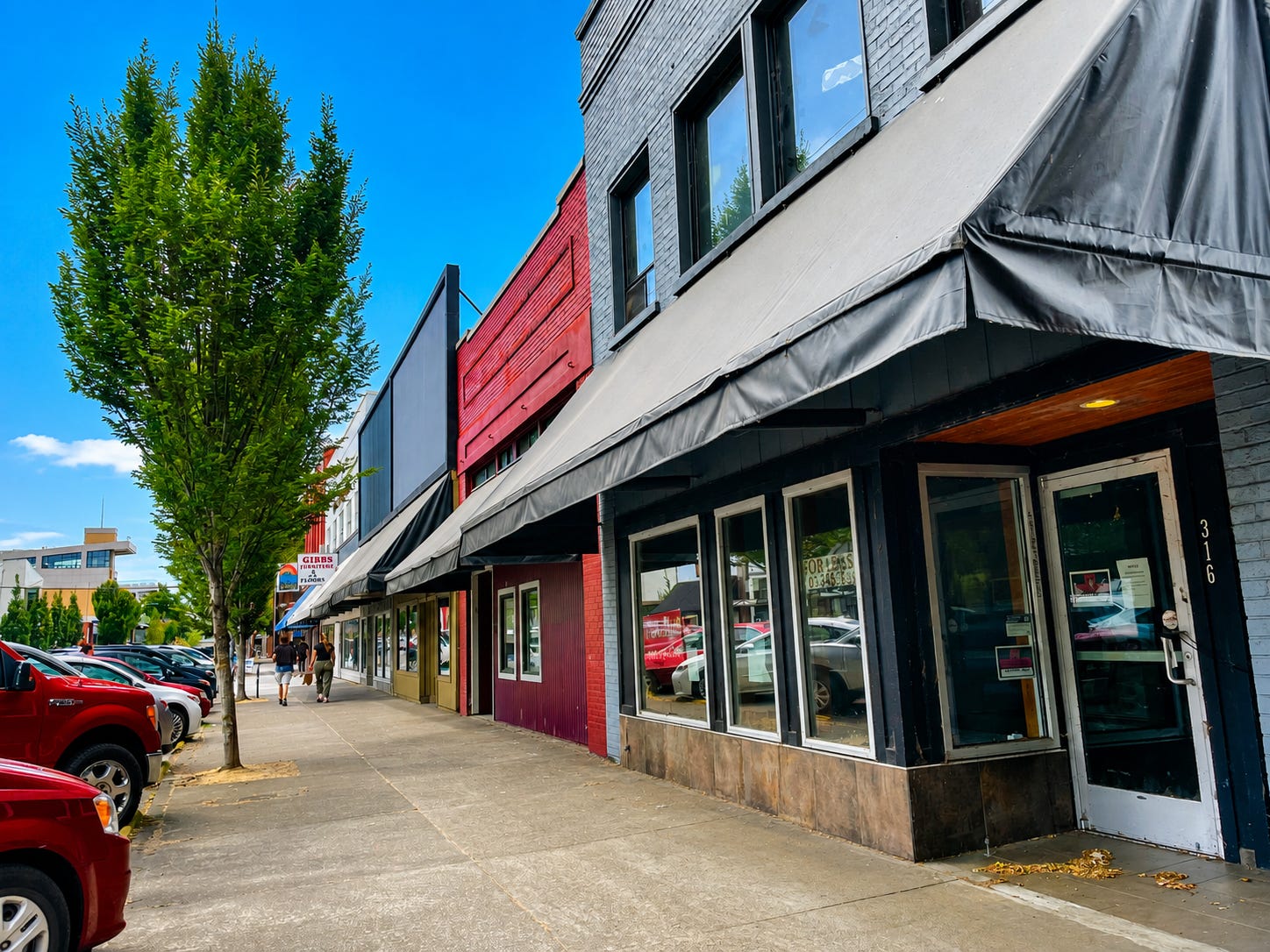
Wike has deep ties to Corvallis. Oregon State University records identify her as Nancy Blackledge Wike, connecting her to the Blackledge family associated with the longtime, and now closed, Blackledge Furniture store in downtown.
The sales and rental history of these particular properties, Maughan’s comments, and how the buildings are currently being marketed, create a lot of questions about whether or not there is an actual desire to sell them.
Before the properties were put up for sale, several were offered for rent. Listings for them date back to late 2023. As Maughan stated, they did not “want to rent to businesses that wanted to rent the space.” Eventually, the properties shifted from rentals to for sale.
It’s common to see real estate listings on Zillow or Redfin with that red “price reduced” box on the listing thumbnail. These are often properties that have been on the market for some time, with the price reduced to increase the potential for a sale.
The former Gibbs Furniture building (334 SW Second St) has been sitting on the market for approximately 740 days. Despite that length of time, its asking price has actually increased from $895,000 to $995,000. More than 10%.
The Gibbs building isn't the only property where the asking price has gone up. 320 SW Second Street increased from $695,000 to $795,000, a whopping 14.4%. 324 SW Second Street increased from $550,000 to $650,000. That’s an 18.2% increase.
These properties are bucking all real estate data trends. National Association of Realtors data shows that the longer properties sit on the market, the more likely sellers are to cut prices. Here, the opposite is happening? With little to no renovations taking place.
If the rental and sales price history doesn’t raise a fair question about how motivated the seller is to sell, then let’s look at how these properties are being marketed.
Does this look like a property with a motivated seller?
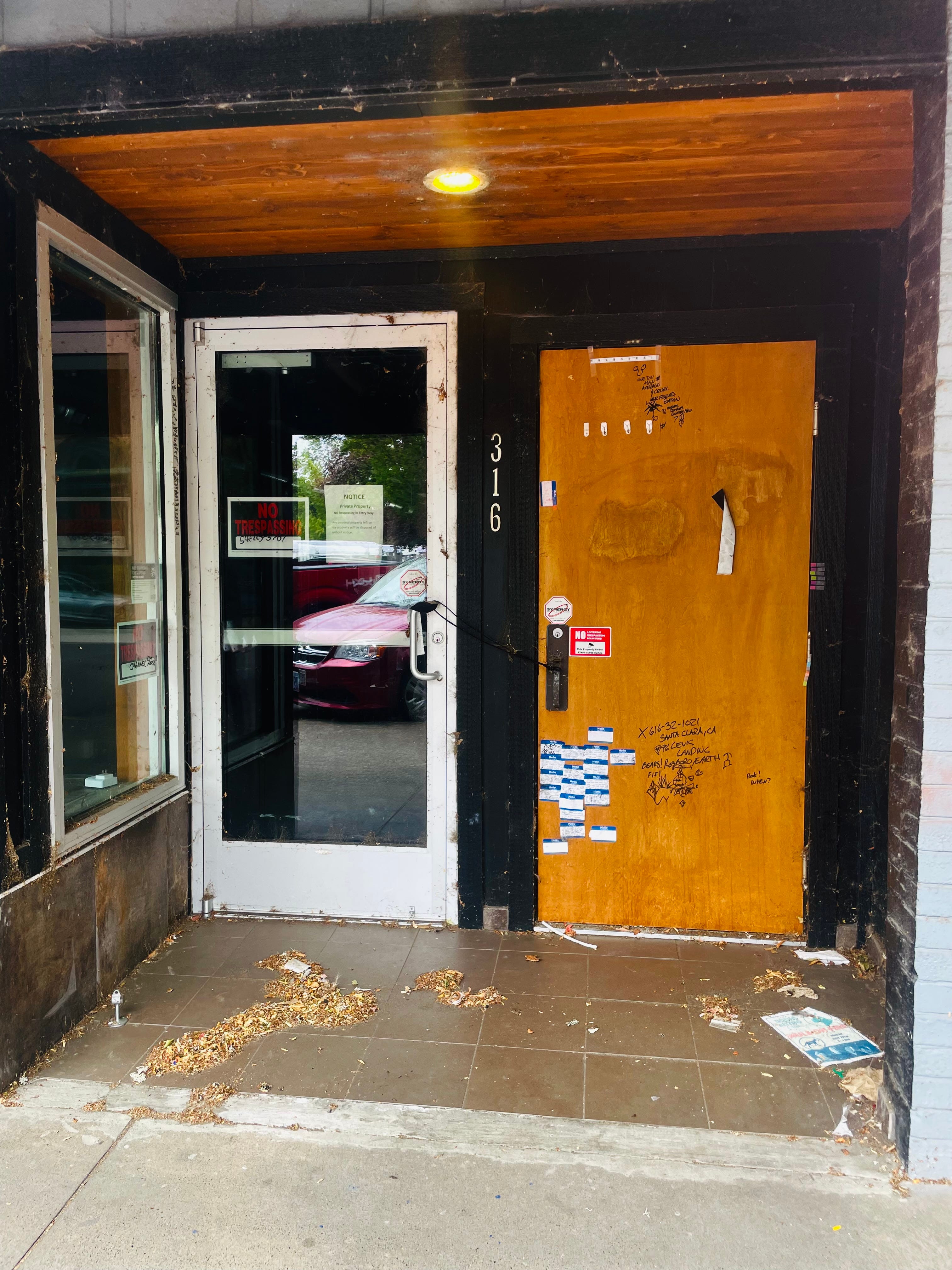
Does this look like a professional listing agent’s effort to attract potential buyers?
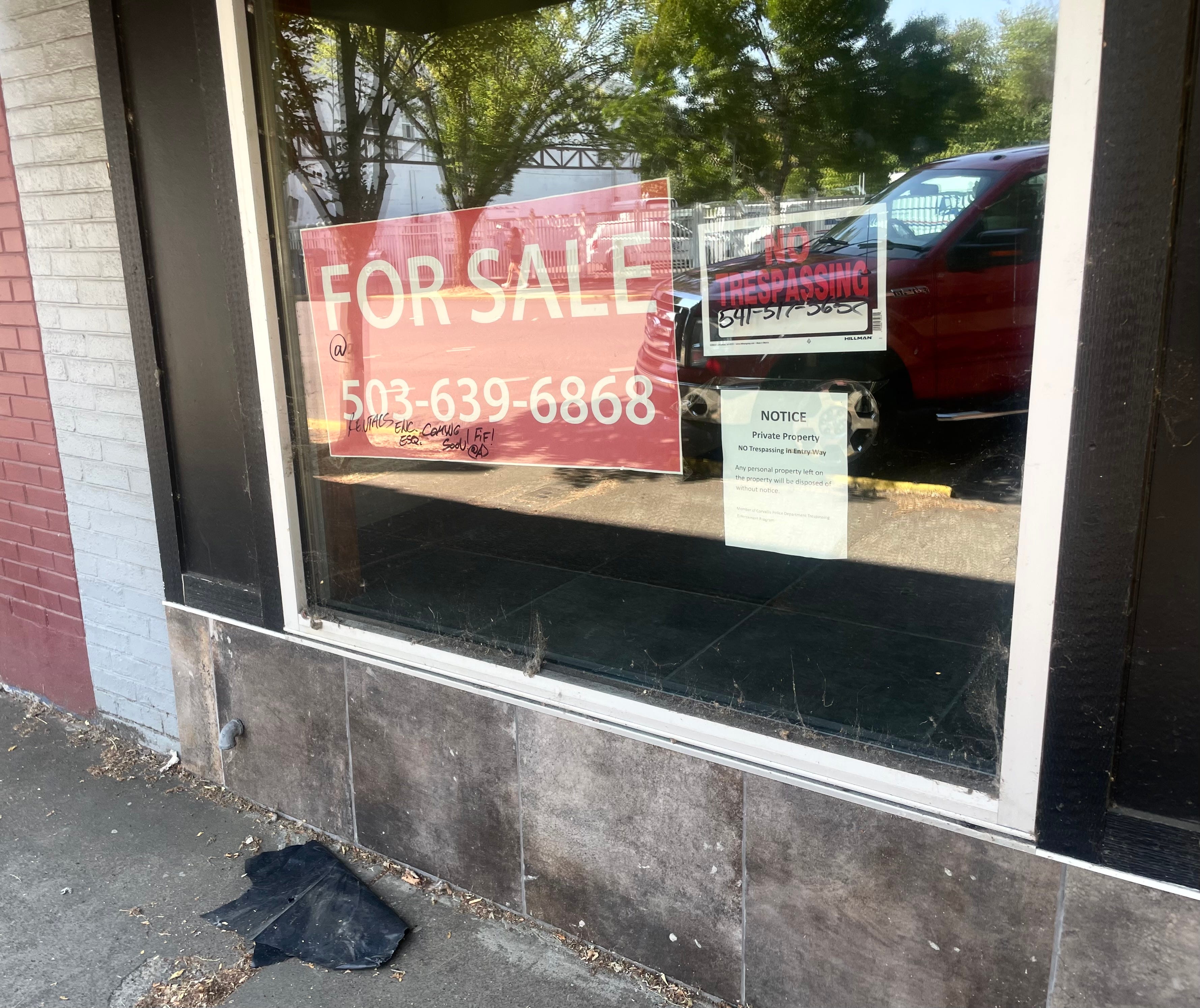
The photos we took don’t exactly give the impression of properties being aggressively marketed for sale.
The number one website for commercial real estate listings in the U.S. is LoopNet. LoopNet contains 90% of all commercial properties listed for sale and is by far the most trafficked website on the internet for commercial listings. None of these properties are listed on there.
The contact information isn’t particularly inviting either. There is only a phone number to call, and the online listings specifically tell prospective buyers, “No email or text.”
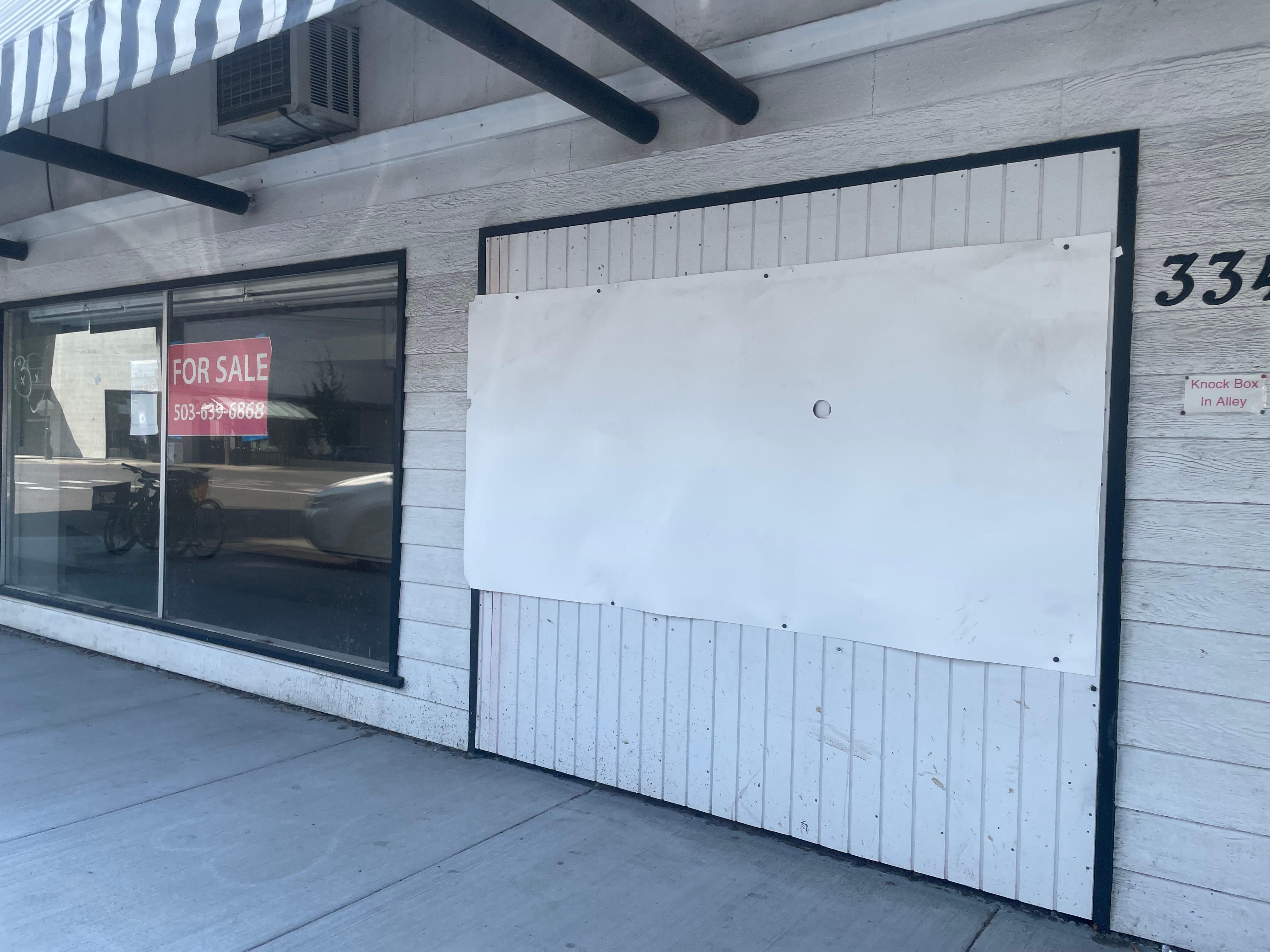
The storefronts, marketing, listings, sale price history, and rental history show almost no evidence of a serious effort to find a buyer or renter. In fact, much of the evidence laid out above seems more likely to discourage potential buyers and renters than attract them.
All of this matters beyond the property lines. And there might be more going on with the owners or city hall than we know.
We do know the city has made a concerted effort to lead a downtown revitalization.
We do know that almost zero effort has been put into selling these buildings.
We do know vacant storefronts mean fewer employees, fewer customers, and fewer visitors to the city center. Maughan sees a sale as part of the solution. “They’re selling that building,” he told the audience at the candidate forum. “That’s going to be good for downtown.”
He is right. A sale would be far better than a vacant block.
We’re just not so sure they are actually up for sale.
This article was written by Brian Lindensmith, a contributor to The Corvallis Inquirer. Feel free to send us your stories or articles to publish at: editor@corvallisnow.com
More recent stories:


Do you have a story for The Inquirer? Email: editor@corvallisnow.com


→ Support us
We’ll keep it ad-free even if you don’t.


She may very well have "deep roots" with Corvallis, but she's lived in Lake Oswego for many years, since 1993 as it happens.
I called the number on the door of one of those properties a couple years ago and never got a call back.