

As a reader, you probably aren’t going to make it through this one. Our analytics say you average just 2 minutes and 23 seconds on an article before moving on to something more interesting. Honestly, we do the same. But we love you, and we will write anyway.
In an attempt to entice you further, our squirrel brains have somehow tied the Earth Liberation Front (ELF) to Corvallis, to the hacker group Anonymous, to Oregon State University, and to data centers. No, it’s not an investigative piece (we wish), but more of a “then and now” comparison. Here goes nothing?
Before most residents here had ever heard the term “eco-terrorism,” Oregon State University was already at the crossroads of one of the most heated environmental battles in America.
To understand how, you have to go back to the Oregon of the 1980s and 1990s.
The timber wars were raging across the Pacific Northwest. Environmental activists chained themselves to trees. Loggers feared for their livelihoods. Courtrooms became battlegrounds. Protest camps appeared deep in the forests. Everywhere, people seemed to be arguing over the same question.
Who speaks for the trees? Corvallis occupied a unique place in that conflict.
Home to Oregon State University, the city was, and still is today, a center of environmental science and forestry research. OSU’s scientists studied forests, genetics, wildlife, and ecosystem management. To many, that research represented hope… a way to better understand and protect the natural world.
To others… it represented something darker.
As biotech advanced during the 1990s, a small number of activists became convinced that genetic research itself posed a threat to nature. They worried about genetically modified plants, industrial forestry, and the growing relationship between universities and private industry. From their view, scientists were no longer studying forests. They were changing them.
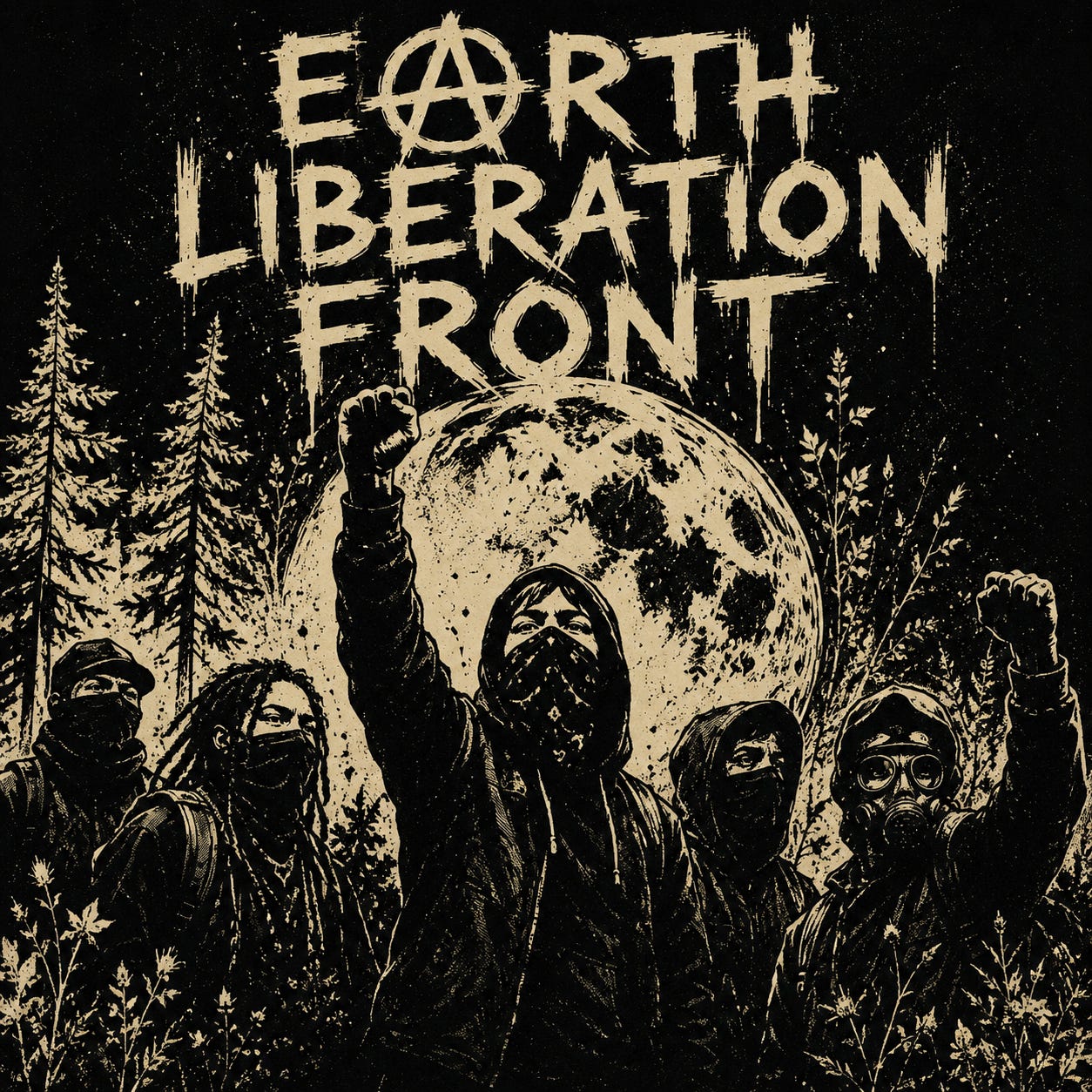
Most environmental activists responded through protests, lawsuits, and public campaigns. We all know those avenues raise public awareness… but rarely make a difference. A much smaller, bolder, more actionable group chose a different path. They called themselves the Earth Liberation Front (ELF).
The ELF operated without leaders, membership rolls, or headquarters. Think of them like a more antiquated version of “Anonymous” the decentralized collective of hackers and activists, who operate without formal leadership. Anonymous fights against entities they accuse of internet censorship, oppression, and corruption… targeting governments, corporations, and extremist organizations.
The Earth Liberation Front, decades ago, targeted corporations, government agencies, and research institutions that they accused of environmental destruction and ecological harm. Oregon State University was one of those targets.
The goal was economic damage. And to send a message. And they did just that.
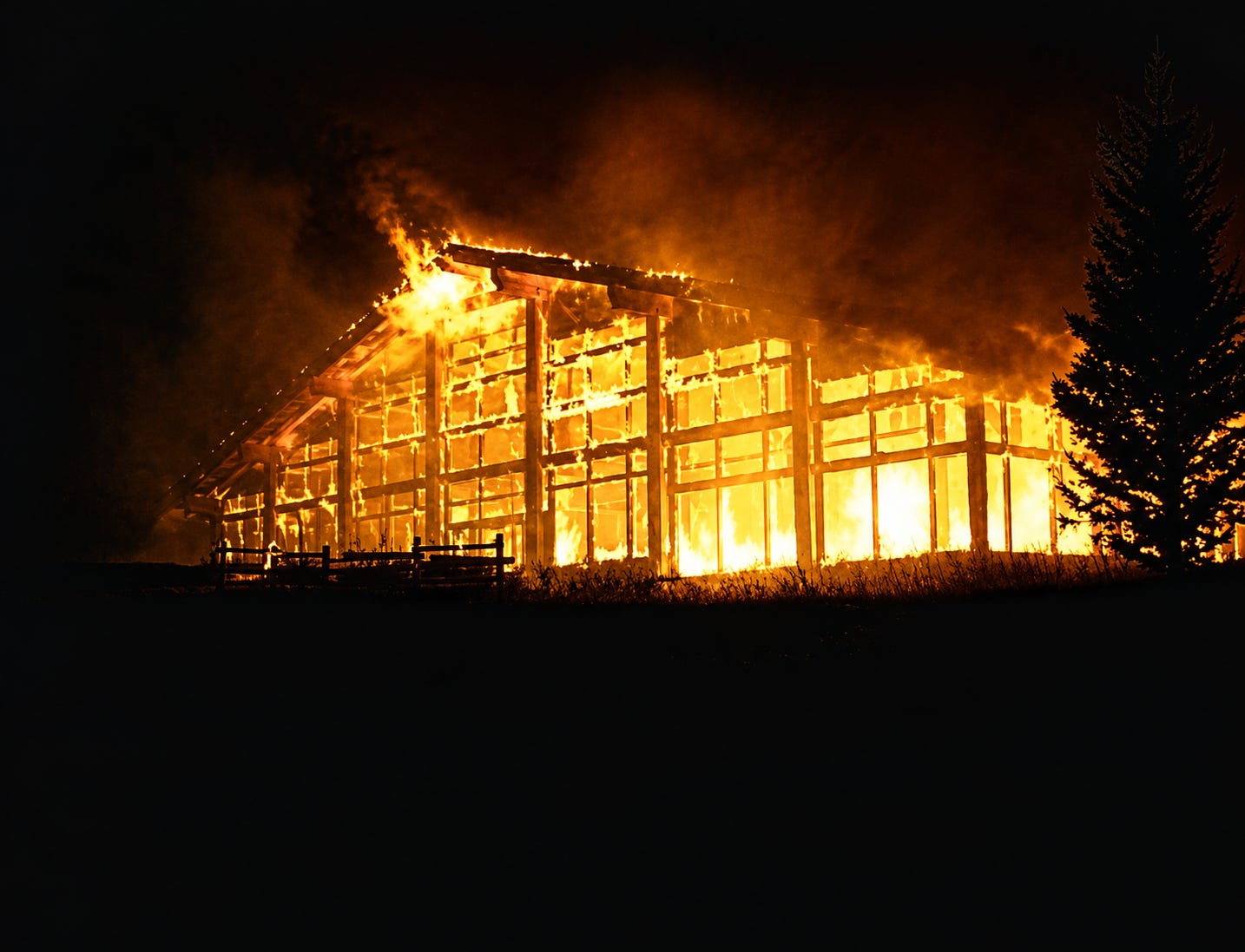
Across the country, fires appeared at ski resorts, logging companies, research facilities, and construction sites. Millions of dollars in property were destroyed. By the early 2000s, the FBI labeled the movement one of the nation’s most serious domestic terrorism threats.
Then, in May 2001, the conflict arrived.
Before dawn, a fire erupted at Jefferson Poplar Farms, a tree research facility that Oregon State University scientists used for poplar tree genetics research. Buildings burned to the ground. Investigators discovered graffiti referencing the Earth Liberation Front. Damage climbed into the hundreds of thousands of dollars.
The ELF even left a message.
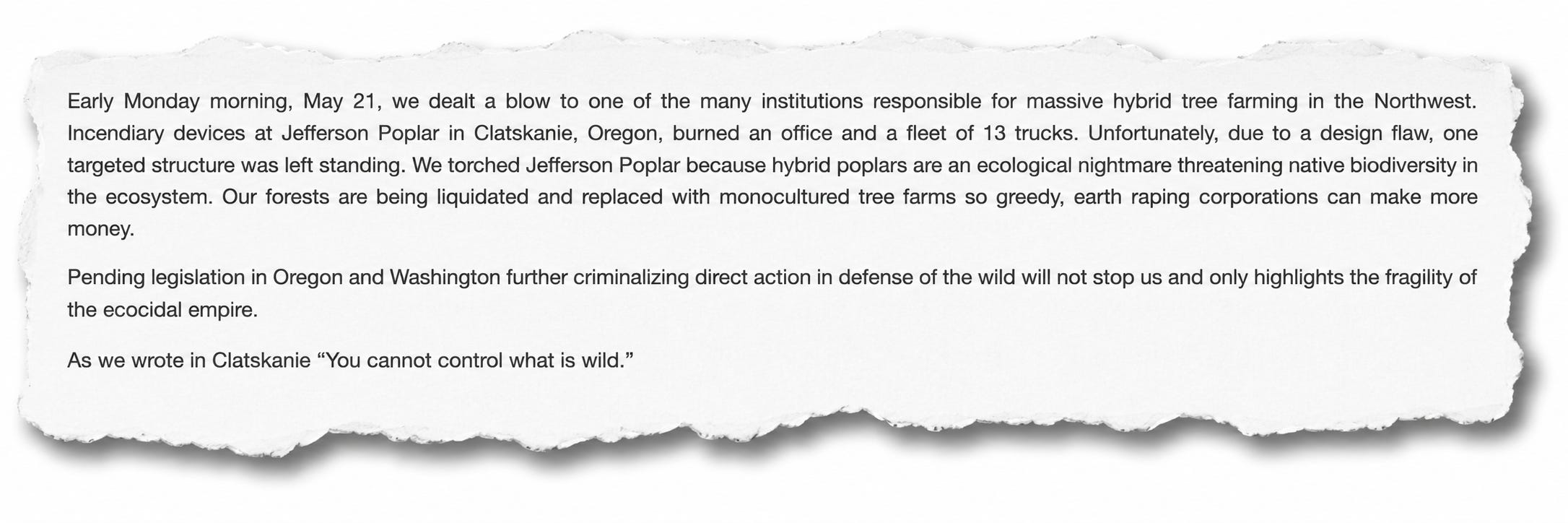
This particular attack targeted OSU researchers who were involved in tree genetics and biotechnology research. This research still happens today at OSU. Oregon State University plays a vital role in massive hybrid tree farming, most notably on hybrid poplars… mainly to study biomass yields for renewable aviation and diesel fuels.
For the ELF, these facilities represented a future they feared… a world where humans engineered forests instead of simply managing them. For our local college researchers, the attacks represented an assault on science itself.
The fires sent shockwaves throughout academic communities in the Pacific Northwest. OSU’s College of Forestry had spent generations studying the forests surrounding our city. Researchers investigated everything from tree genetics to sustainable harvesting practices. Many of the scientists saw their work as essential to protecting future forests.
The result was a collision of values… or ideology.
One side believed science offered solutions. The other feared science was becoming part of the problem.
The Earth Liberation Front would eventually unravel. Informants, arrests, plea agreements, and a sweeping federal investigation dismantled much of the movement. Operation Backfire resulted in numerous convictions connected to arson’s, and acts of sabotage across Oregon.
Today, more than two decades later, the burned buildings are gone, and the headlines have faded, right? Wrong. They haven’t faded. They are still there. Every single day. They are on every news website you visit. Even our own. And once again, Oregon State University, here in Corvallis, is playing a part. And once again, there is a collision of values… and ideology.
It is tempting to dismiss the ELF as a relic of a different era… a movement born from the timber wars, genetic engineering debates, and environmental fears of the late twentieth century.
The fear now… has found a new target. We aren’t debating genetically engineered poplar trees. Or those micro clover seeds you might plant in your lawn, that only grow two inches, produce no flowers, and sell on Amazon.com. The conversation has shifted towards AI, data centers, and the infrastructure required to power a new type of scientific revolution.
Supporters argue the technology could transform medicine, education, scientific research, manufacturing, and countless other fields. And it will. It already has. It has solved genomes, imaging diagnostics, and has produced new drug discoveries. It has balanced smart grids and combated deforestation through analytics.
Critics point to growing electricity demands, water consumption, land use, and the environmental footprint required to support that growth… ways that will hurt us, and contribute to deforestation. And it has. It has consumed power, water, and produced carbon emissions that won’t be fully understood for years.
Directly across the street from American Dream Pizza, Oregon State University is building a dedicated data center to support one of the nation's most powerful university AI supercomputers.
Every generation inherits a technology that promises to reshape society. Railroads transformed the landscape. Dams altered rivers. Highways changed cities. Science changed Poplar tree genetics. The internet rewired communication. AI data centers are the next chapter in that story.
More than twenty years after “eco-saboteurs” targeted research connected to Oregon’s forests, we once again find ourselves, and our city, living amongst debates about science, technology, and the future. The headlines have changed, but all the questions the Earth Liberation Front posed remain the same.
How do we build tomorrow without losing sight of what we are trying to protect today?
Either way, our city finds itself part of the debate. Again. Part of the revolution. Again.
Don’t think for a second that petitions, protests, or public campaigns can stop it. Yes, they can raise awareness, but the AI supercomputer and its supporting data center are already being built. By a company that is worth $5 trillion. A company that could buy all of Corvallis a thousand times over. They will use our water, our power, and our resources. They will help us in some ways and hurt us in others. Only time will tell.
“Welcome to the struggle of all species to be free. There is no compromise in defense of Mother Earth." - The Earth Liberation Front
Do you have a story for The Inquirer? Email: editor@corvallisnow.com


→ Support us
We’ll keep it ad-free even if you don’t.


A sobering reminder that every generation is told some version of the same story: this is the future, it’s coming, and resistance is futile. Sometimes that story is true, at least in the sense that the machinery has already been set in motion before the public has had much chance to reckon with it.
People living inside that future eventually come to regard it as normal. They inherit its benefits, its conveniences, its new powers, and also its losses. What once would have caused wonder and alarm becomes daily life. That doesn’t mean every consequence should be accepted with a shrug.
The problem, as always, is that we’re seduced by the technology and driven by the profit, while only dimly aware of the unknown unknowns. Who benefits? Who pays? What improves? What disappears along the way? Progress has a long history of presenting us with benefits up front and invoices later.