
Before he became one of the most important scientists in history, Linus Pauling had a falling out with the man who would later be known as the “father of the atomic bomb.” That man was J. Robert Oppenheimer, the physicist behind the Manhattan Project and the central figure in the recent film Oppenheimer.
And the reason? Oppenheimer tried to pursue Pauling’s wife.
While Pauling was away at work, Oppenheimer showed up at their home and invited Ava Helen Pauling to run away with him to Mexico. She refused and told her husband. Pauling immediately cut off all ties. What could have been one of the most powerful scientific collaborations of the 20th century ended on the spot.
But long before any of that, before Caltech, before Nobel Prizes, before global fame… Pauling was just a student in Corvallis. And he didn’t even finish high school.
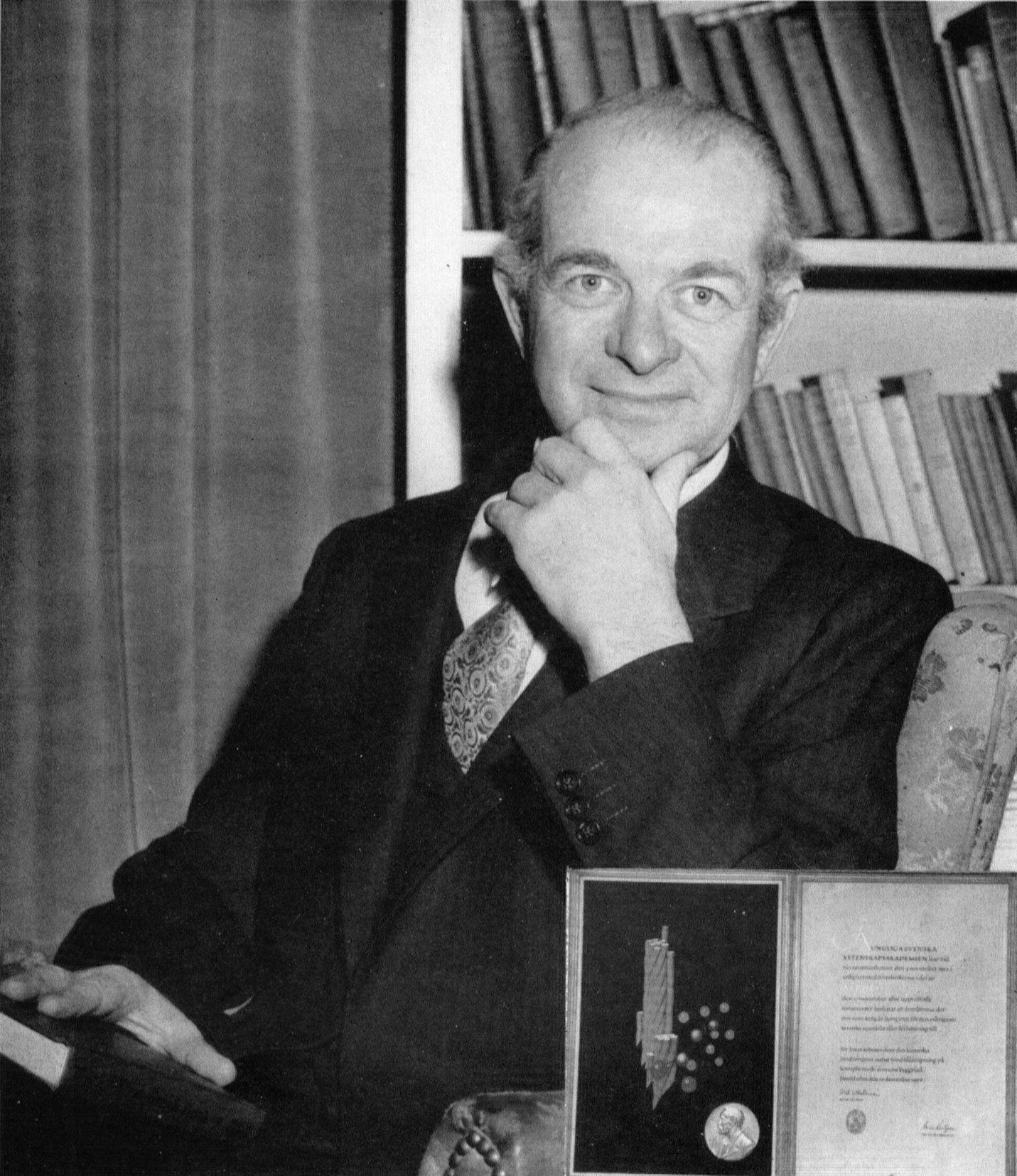
Photo: https://www.nobelprize.org/
A Different Kind of Student
Pauling left formal schooling early, but it didn’t slow him down. By 1922, he had earned a degree in chemical engineering from Oregon State University, then known as Oregon Agricultural College. Corvallis wasn’t just a stop along the way. It was the launchpad.
At OSU, he worked various campus jobs, including janitorial work, cutting wood, and butchering meat. He studied intensely and quickly stood out. Professors noticed, and opportunity followed.
From Corvallis to the Center of Science
After leaving Oregon State University, Pauling quickly rose to prominence in the scientific world. He earned a Ph.D. from the California Institute of Technology and stayed on as a professor, where he pioneered groundbreaking work on the nature of the chemical bond, essentially explaining how atoms connect to form molecules.
His research helped shape modern chemistry and even influenced biology, including early insights into protein structures. During World War II, he contributed to military-related research, but later became a leading voice for nuclear disarmament, earning the Nobel Peace Prize to go along with his earlier Nobel Prize in Chemistry… making him one of the only people ever to win two unshared Nobel Prizes.
Pauling and Oppenheimer (the father of the atomic bomb) became connected through their work in physics and chemistry. The two even discussed teaming up to tackle the fundamental nature of the chemical bond, combining Oppenheimer’s mathematical expertise with Pauling’s chemical insight. But the relationship ended abruptly after Oppenheimer made a personal advance toward Pauling’s wife. What began as a promising scientific partnership quickly turned into a permanent and personal break.
Ironically, the man he split from, Oppenheimer, would go on to lead the development of the atomic bomb, while Pauling would take a very different path.
War Work… Then a Moral Pivot
Like many scientists of his era, Pauling contributed to wartime research during World War II. But afterward, he made a sharp turn. He became one of the most outspoken advocates for nuclear disarmament, directly opposing the kind of weapons Oppenheimer helped bring into existence. Maybe this turn was fueled by the fact that Oppenheimer pursued his wife, or maybe it was based on moral grounds.
The shift from building tools of war to campaigning for peace, would define the second half of his life.
Nearly a Mile
Pauling didn’t just leave behind ideas or theories… he left behind an enormous paper trail. In 1986, he announced he would donate his personal papers to Oregon State University (not CalTech). After his death, the bulk of that collection arrived in Corvallis.
It was massive.
When archivists measured it, the collection stretched 4,400 feet long, nearly 0.8 miles if stacked end to end. That archive, now housed at OSU, includes hundreds of thousands of items: research notes, correspondence, drafts, and personal materials spanning his entire life.
It was so significant that OSU’s Special Collections were essentially built around it. And researchers are still digging through it today. New books continue to come out of Corvallis, including recent work by an OSU archivists that dive into lesser-known parts of his life, his Oregon roots, his global travels, and the “what if” moments that shaped his trajectory.
Even decades later, his life is still being unpacked, piece by piece, here in Corvallis. The Linus Pauling Institute is based at Oregon State University, continuing research into health, nutrition, and disease. And every year, Oregon recognizes his legacy with “Linus Pauling Day.” There is even a middle school here named after him.
Not bad for someone who never graduated from high school.
Do you have a story for The Inquirer? Email: editor@corvallisnow.com


→ Support us
We’ll keep it ad-free even if you don’t.

