

Gardening season is officially underway, it’s unfortunate that not everyone can have a home garden. Community gardens offer an alternative. Gardens are a great way to grow your own food, meet neighbors, or spend more time outdoors. There is a wide range of community gardening options here, from individual plots to volunteer-run food production spaces.
This was supposed to be a quick write-up on community gardens in Corvallis. After some deeper diving and research, we found there are more of them than we expected. However, the demand also appears to be much higher than anticipated. These are just some of the community gardens available to the public.
(City of Corvallis Parks & Rec)
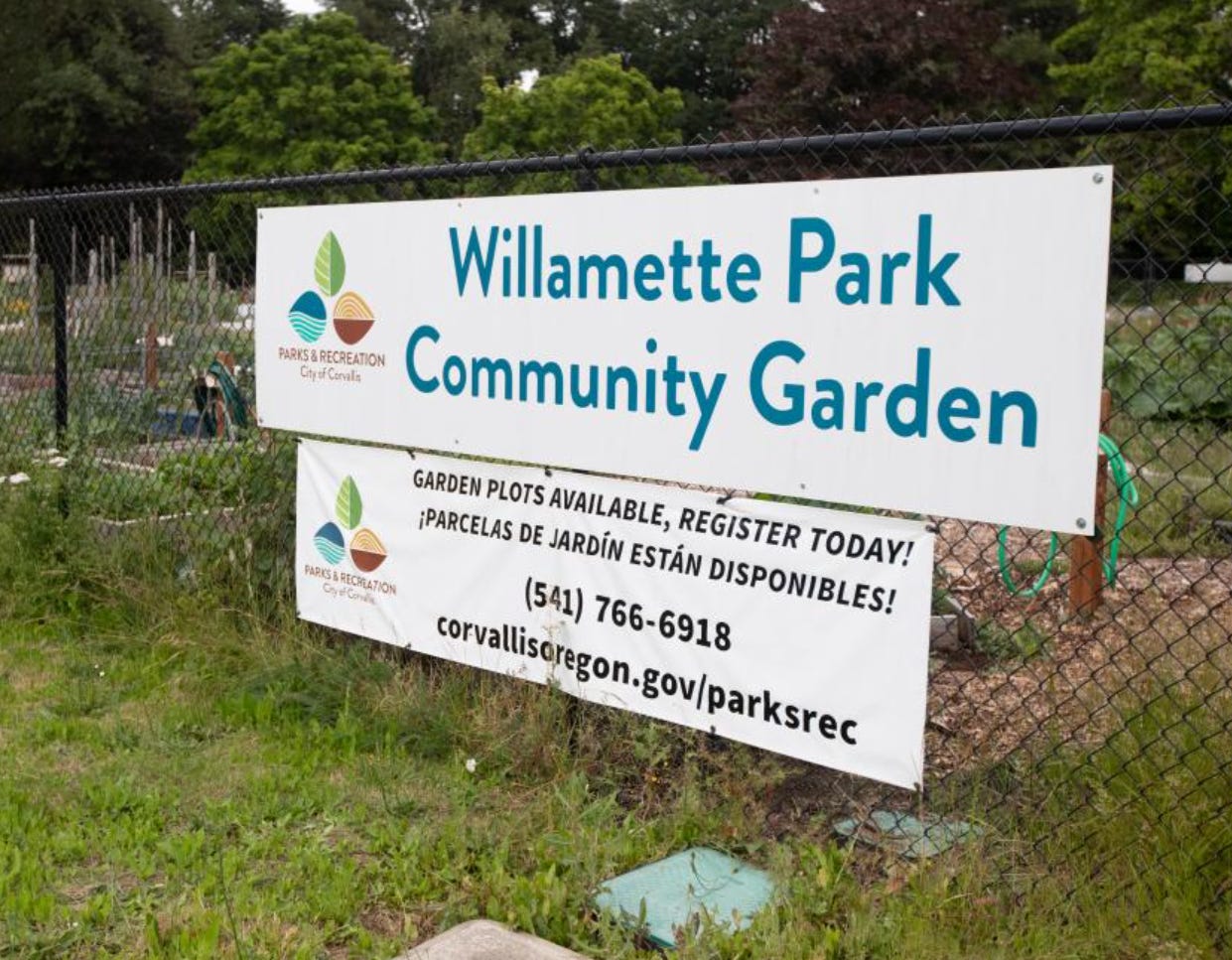
Let’s start off with the Parks and Recreation department community gardens. The City of Corvallis manages several community gardens with individual plots available for rent. Registration typically opens March 1 each year.
Chintimini Park Community Garden – Located next to the Corvallis Community Center, this garden offers raised beds and shared tools, making it one of the most accessible options in town. Plots are available on a seasonal basis, with priority registration for residents with mobility needs. It’s a smaller, community-oriented space focused on participation and beautification. More info.
Willamette Park Garden – 10’ x 10’ Annual Plot - A smaller, entry-level plot designed for annual crops only (think vegetables, herbs, and flowers that are replanted each season). These plots are ideal for beginners or gardeners who want a manageable space. About 10 plots are available each year, with water access included and a relatively low annual fee. More info.
Willamette Park Garden – 10’ x 20’ Annual Plot - A larger version of the standard annual plot, offering twice the growing space for those looking to expand beyond a small garden. These plots are also restricted to annual plants. Around 20 plots are available each season. More info.
Willamette Park Garden – 10’ x 20’ Annual + Perennial Plot - This option allows for both annual and perennial plants, meaning gardeners can establish longer-term plantings like berries, herbs, or flowers that return year after year. It’s a more flexible plot type, but still requires adherence to the city’s organic gardening standards. These are limited in number and tend to be in higher demand. More info.
Willamette Park Garden – Raised Beds (Accessible Plots) - These raised bed plots (6’ x 9’) are designed with accessibility in mind, with priority given to gardeners with mobility challenges. They provide easier access for planting and maintenance, while still offering the same shared water access and community garden experience. Only a small number of these beds are available each year. More info.
Right now, the only option listed above with available plots is the Willamette Park Garden – Raised Beds. You can sign up for the waitlist through each link provided. It’s obvious there is a significant demand here. Maybe the city should consider opening more land for community gardens? Willamette Park is the largest park in Corvallis at 287 acres. Surely, there is enough space to add capacity.
Parks and recreation isn’t the only game in town. There are other options available.
Calvin Community Garden – A long-running neighborhood garden hosted by a local church on NW Dixon Street. Gardeners pay a small annual fee and share tools, water, and knowledge in a collaborative, community-focused space where people regularly swap seeds and advice. Plots are 11’ x 36’ feet. More info.
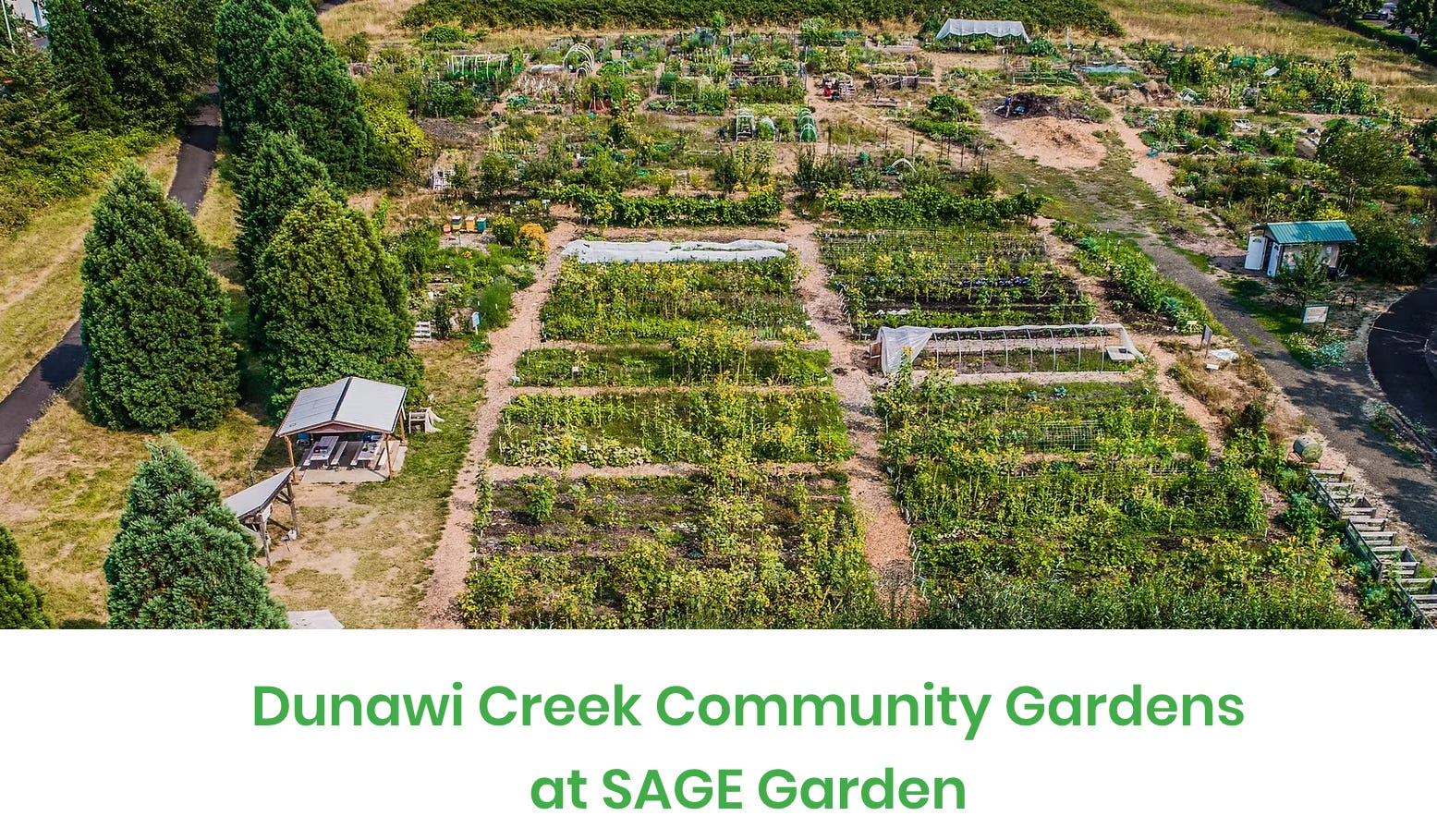
Dunawi Creek Community Garden – One of the largest in Corvallis, this two-acre garden in Starker Arts Park offers nearly 100 plots, shared berry patches, tools, and a strong community culture. Gardeners range from beginners to experienced growers, with a focus on organic practices and collaboration. More info.
Leonard Street Community Garden – The Leonard Street Community Garden was created by local residents in South Corvallis to help address food insecurity in the Tunison neighborhood. With support from DevNW, a vacant 1,000 sq. ft. lot was transformed into a 14-bed garden that provides fresh produce to nearby residents. Perimeter fruit plants are open for anyone to enjoy, and seasonal work parties bring the community together to learn and maintain the space. More Info.
Sunrise Corner Community Garden – A unique, privately owned garden offering free plots to the public. Located in southeast Corvallis, it emphasizes accessibility, neighbor-to-neighbor connection, and a welcoming entry point for first-time gardeners. More info.
Even if you don’t have a plot at one of the community gardens, they’re still worth a visit. Many are open to the public, offering a chance to walk through, see what’s thriving, and get a feel for what grows well in the local climate.
Raised beds are packed with early greens to create trellising setups and pollinator-friendly flowers, these spaces double as living classrooms. It’s an easy way to gather ideas, learn from other gardeners, and start planning what you might want to grow next season.
Gardening here leans heavily toward cool-season crops and hardy vegetables, with summer heat-loving plants like tomatoes and squash filling in later. The long growing season means you can often plant and harvest multiple rounds of crops each year.
Some of the more popular choices here include:
Leafy Greens (lettuce, kale, spinach, arugula) – Thrive almost year-round in Oregon’s cool, moist climate and are some of the easiest, most reliable crops.
Root Vegetables (carrots, beets, radishes, turnips) – Do especially well in local soil and can be planted in multiple seasons for continuous harvests.
Brassicas (broccoli, cabbage, cauliflower, Brussels sprouts) – Cool-weather favorites that handle frost well and are widely grown across Oregon gardens.
Tomatoes & Peppers – Summer staples that grow well with enough sun and warmth, typically planted after late spring frost.
Beans & Squash (zucchini, cucumbers, pumpkins) – Fast-growing, high-yield crops that thrive in warmer summer months.
Herbs (basil, mint, rosemary, thyme, chives) – Easy to grow and great for beginners; many perennial herbs come back year after year.
Onions, Garlic & Leeks – Reliable staples that perform well in Oregon’s climate and store well after harvest.
Berries (especially marionberries, strawberries, raspberries) – The Willamette Valley is famous for berries, which thrive in the region’s mild, wet winters and warm summers.
If you think Corvallis needs more community garden space, especially with many Corvallis Parks & Recreation plots currently full or waitlisted, you can share your feedback directly at: parksandrecreation@corvallisoregon.gov
Do you have a story for The Inquirer? Email: editor@corvallisnow.com


→ Support us
We’ll keep it ad-free even if you don’t.

