
New Corvallis Population Demographics
Population, income, race, marital status - explained...

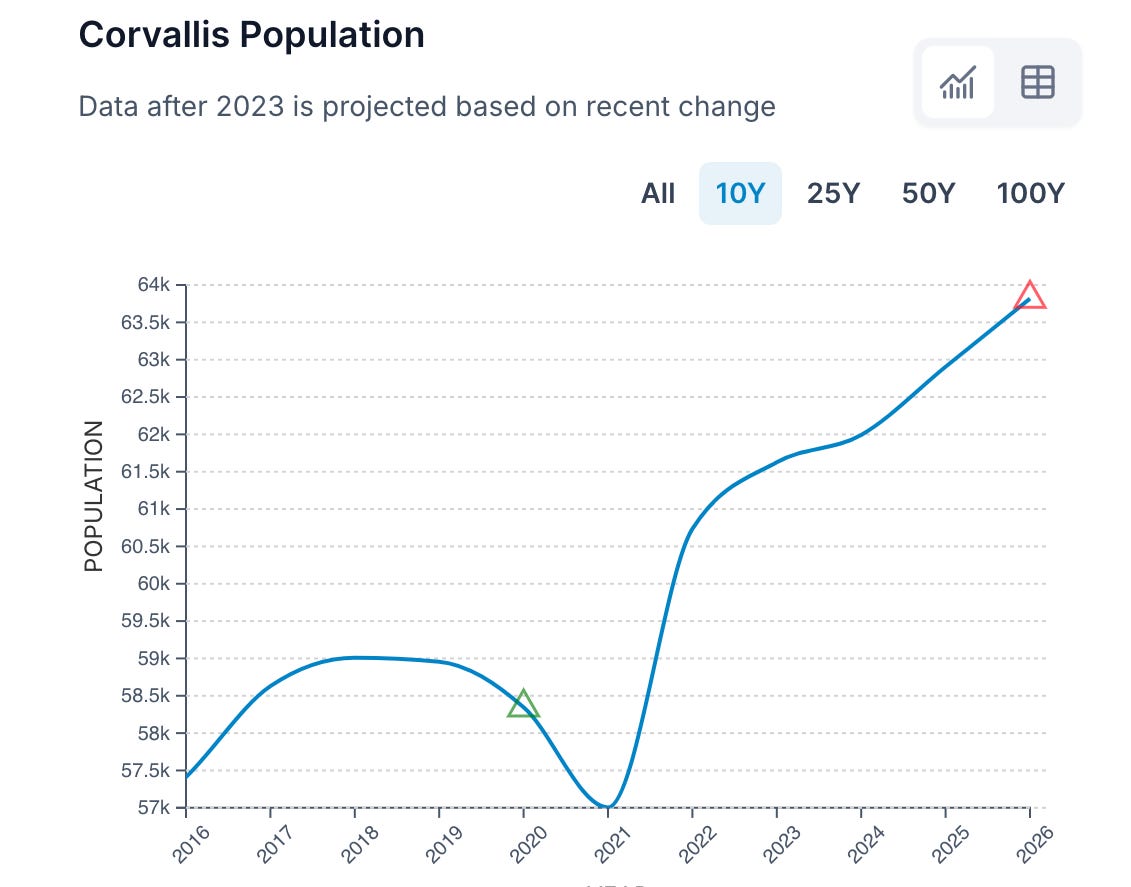
CORVALLIS, Ore. — Corvallis has continued its long-term trend of population growth, expanding its community steadily over the past decade and showing resilience even after the pandemic. New data from local estimates and national demographic sources paint a picture of a city that’s growing both in raw numbers and in regional significance

What’s Driving Corvallis’ Growth?
Several factors contribute to the city’s demographic trends:
◼ Education and OSU Influence
Oregon State University’s presence remains a key part of the city’s profile, drawing students, faculty, and associated economic activity. Enrollment trends at OSU help anchor population stability even as annual increases vary.
◼ Balanced Growth
Unlike some metropolitan areas that saw sharp swings in growth during and after the pandemic, Corvallis has experienced steady, moderate increases with no major population declines reported in the latest datasets.
◼ Regional Comparisons
Across Oregon, multiple mid-sized cities have seen diverse trends — for example, larger urban cores like Portland have grappled with population shifts, while smaller cities such as ours maintain incremental growth.
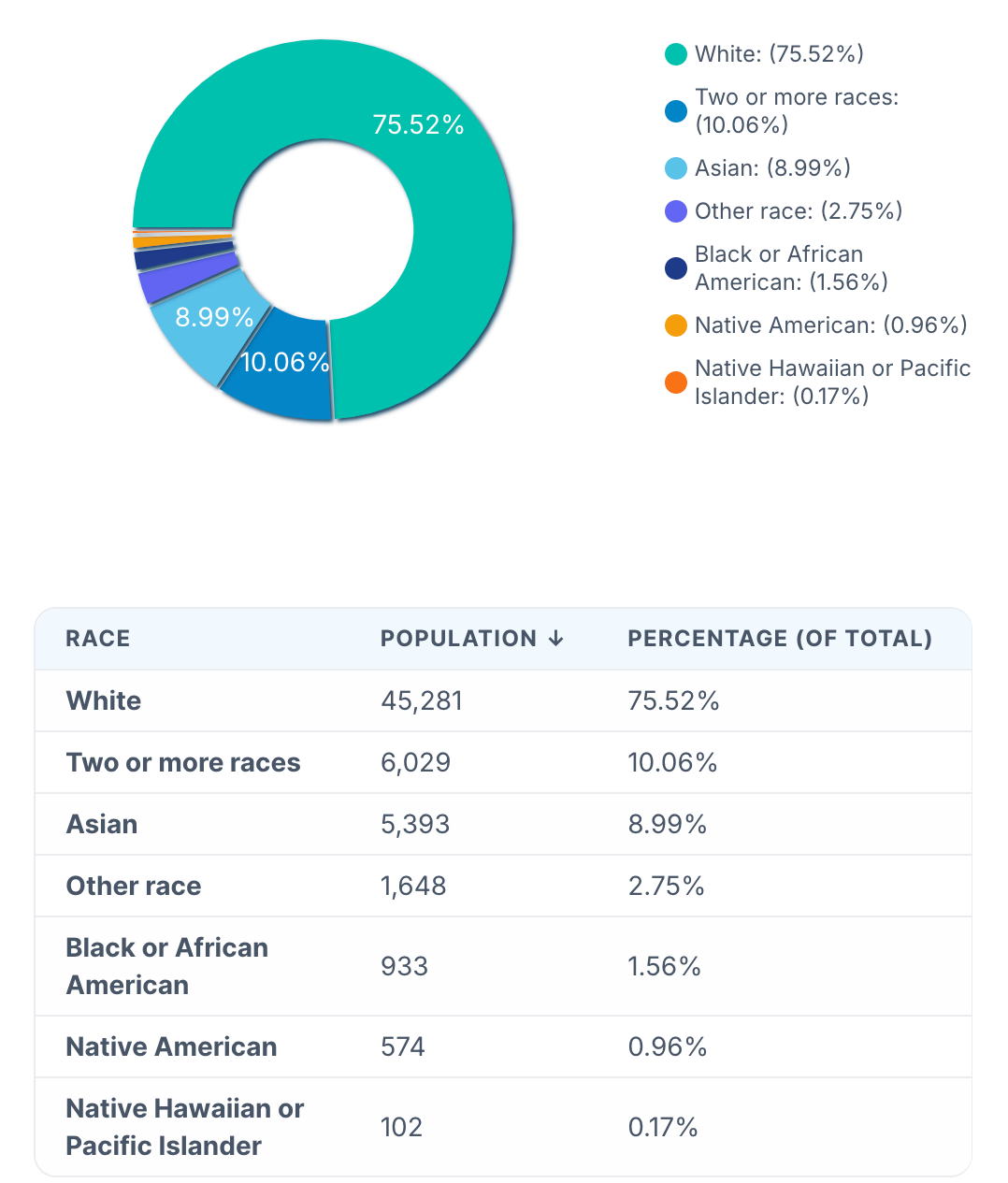
Population by race:
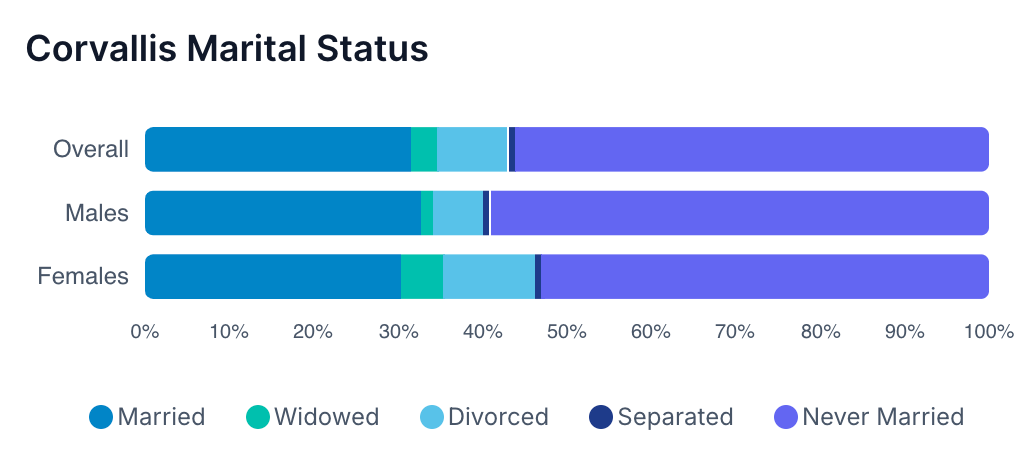
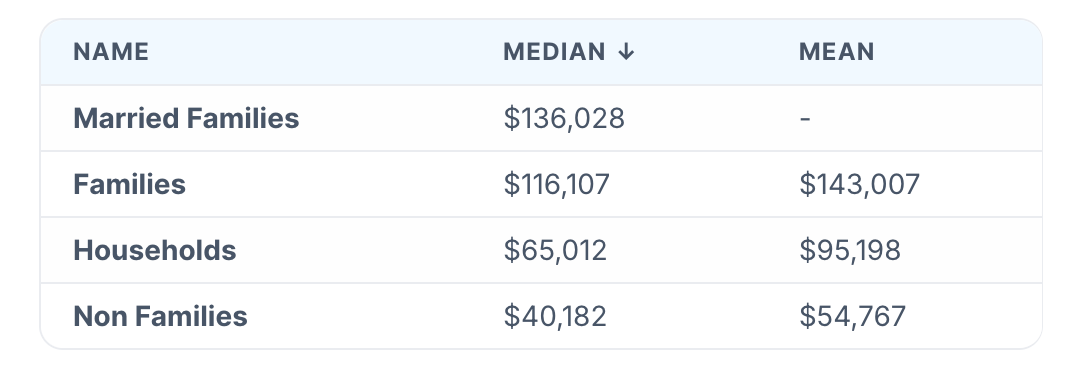
Income levels:
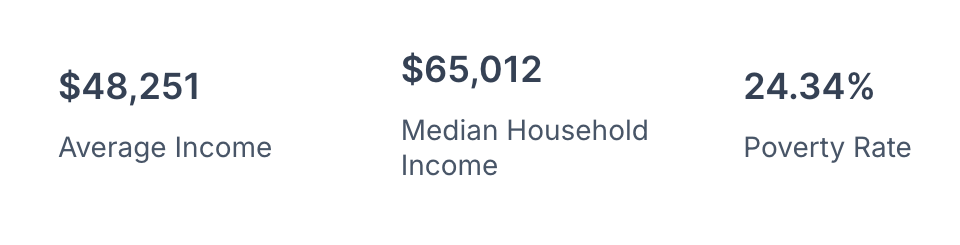
Corvallis continues to grow incrementally but consistently, supported by its role as a regional education hub and its attractive quality of life. Local planners use multiple sources — from PSU population forecasts to municipal estimates — to guide everything from infrastructure planning to housing strategy.
With population projections extending into the mid-2030s, Corvallis is expected to remain a stable, steadily growing Oregon city with demographic momentum well into the next decade.
— The Corvallis Inquirer, Mar. 1, 2026
Do you have a story for The Inquirer? Email: editor@corvallisnow.com

→ Support us
We’ll keep it ad-free even if you don’t.

