

Samaritan Health Services is a widely discussed issue in Corvallis, especially with the pending change in ownership. We decided to take a look at the organization’s latest publicly available Form 990 tax filings and break down some of the numbers into a more easily understandable read. ProPublica’s most recent filings are from 2024, as the 2025 filings have not yet been posted.

Last year, Samaritan Health Services announced plans to affiliate with Tacoma-based MultiCare Health System. This deal was described publicly as an affiliation, that would effectively place the much larger MultiCare in control.
This affiliation comes as Samaritan faces mounting financial pressure from rising healthcare costs and reimbursements that have not kept pace. MultiCare has said it plans to make major investments into Samaritan over the next decade.
Breaking down the most recent publicly available IRS Form 990 filings, they paint a picture of a regional healthcare system under significant financial pressure, despite generating hundreds of millions in annual revenue.
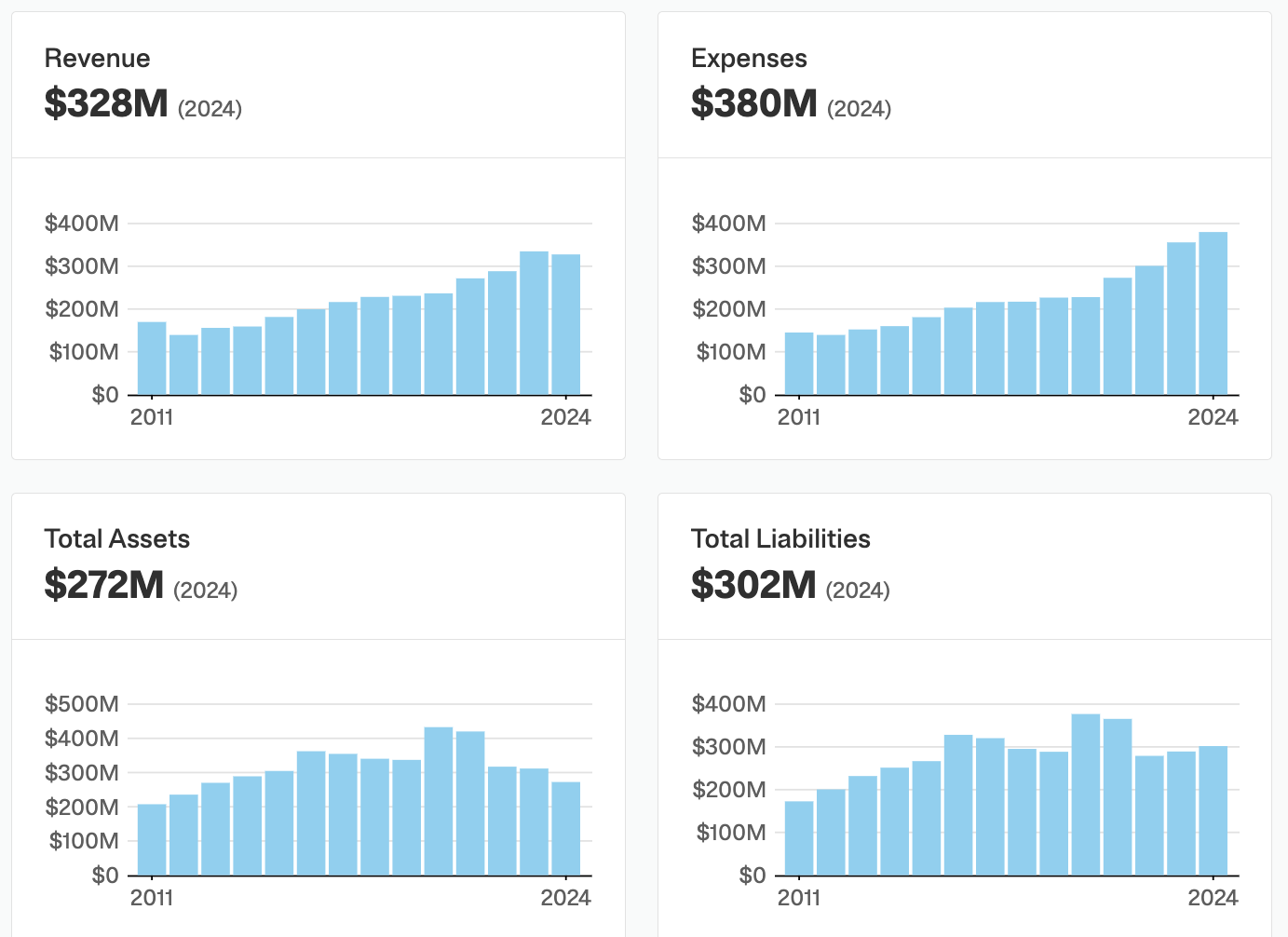
According to the 2024 IRS Form 990 filing, Samaritan Health Services reported:
$327.7 million in total revenue
$380.1 million in total expenses
A net loss of roughly $52.4 million. That represents a major deterioration from the previous 2023 fiscal year, when the organization reported a loss of approximately $20.9 million. More than doubling their losses year over year.
At the same time:
liabilities increased to over $301 million
total assets fell to roughly $272 million
For a nonprofit healthcare system, negative net assets become an important long-term warning sign if sustained over multiple years.
Who Gets Paid What
One of the clearest trends in the filing is rising labor costs. Samaritan reported $171.7 million spent on salaries, compensation, and employee benefits in 2024. That was up nearly $10 million from the prior year. The organization listed 1,583 employees.
Additional payroll-related expenses included:
$115.3 million in salaries and wages
$29.8 million in employee benefits
$9.4 million in payroll taxes
$6.5 million in pension contributions
One number that stood out most to us in the filing was how much Samaritan spent on outside staffing contractors. The largest independent contractor listed was Medefis Inc., which Samaritan paid $31.6 million. Other major staffing contractors included:
Oregon Oncology Specialists LLP — $7.5 million
CompHealth — $6.4 million
Together, just those three staffing-related contractors accounted for over $45 million. Medfefis Inc. provides access to a national network of staffing suppliers, allowing for competitive, fair-market rates. Healthcare systems nationwide have struggled with staffing shortages since the pandemic. They now often rely on expensive traveling nurses, contract physicians, and temporary labor.
Executive Compensation
The filing also discloses compensation for top executives and physicians.
Douglas Boysen — President & CEO
$1,336,861 compensation - $71,010 additional compensation
Laura Hennum — VP / CEO Good Samaritan Regional Medical Center
$802,185 compensation - $45,907 additional compensation
Robert Turngren, MD — Chief Physician Executive
$647,392 compensation - $66,045 additional compensation
Joseph Cahill — COO
$628,698 compensation - $58,457 additional compensation
Daniel Smith — CFO
$622,805 compensation - $66,116 additional compensation
Other Top 10 Highly Compensated Employees
Outside of those 5 individuals, the next top 10 executives and medical leaders received compensation packages exceeding $300,000 annually, including:
Wendie Wunderwald, VP CEO MVH (through September)
$536,648 compensation + $52,879 additional compensation
Margaret Mikula, MD, VP Chief Quality Officer
$506,638 compensation + $71,975 additional compensation
Bruce Butler, VP CEO Health Plans
$510,080 compensation + $43,964 additional compensation
Pankaj Sapra, SVP / CIO
$461,225 compensation + $73,414 additional compensation
Lesley Ogden, MD, VP CEO NLH / CEO SPCH
$464,515 compensation + $60,746 additional compensation
Kelley Kaiser, VP / CAO
$448,420 compensation + $70,133 additional compensation
Daniel Keteri, VP CEO SAGH
$427,713 compensation + $66,520 additional compensation
Tyler Jacobsen, VP Chief Legal Officer
$377,517 compensation + $75,766 additional compensation
Julie Osgood, VP COO SMG
$381,463 compensation + $41,820 additional compensation
Daniel Rackham, VP CEO MVH (starting August)
$297,542 compensation + $68,730 additional compensation
The combined total compensation and additional compensation for these 15 Samaritan Health Services executives and leaders was $9,383,184.
The filing also shows Samaritan spent:
$99,794 on lobbying expenses in 2024
The organization checked “Yes” indicating it engaged in lobbying activities during the tax year. The filing does not indicate direct political campaign activity.
IRS Form 990 filings offer one of the most detailed public looks into the hospital finances. It’s not just us though, Samaritan is facing the same pressures hitting healthcare systems nationwide, including rising labor costs, reliance on expensive contract staffing, shrinking margins, large infrastructure expenses, and mounting liabilities (see $100 million lawsuit).
At the same time, executive compensation remains substantial, even as the nonprofit system posted major financial losses.
Do you have a story for The Inquirer? Email: editor@corvallisnow.com


→ Support us
We’ll keep it ad-free even if you don’t.

