

As the $200 million Jen-Hsun Huang and Lori Mills Huang Collaborative Innovation Complex rises along Monroe Avenue at Oregon State University, much of the public conversation has focused on research prestige and economic growth. But a quieter debate is unfolding about what the building could mean for everyday residents of Corvallis.
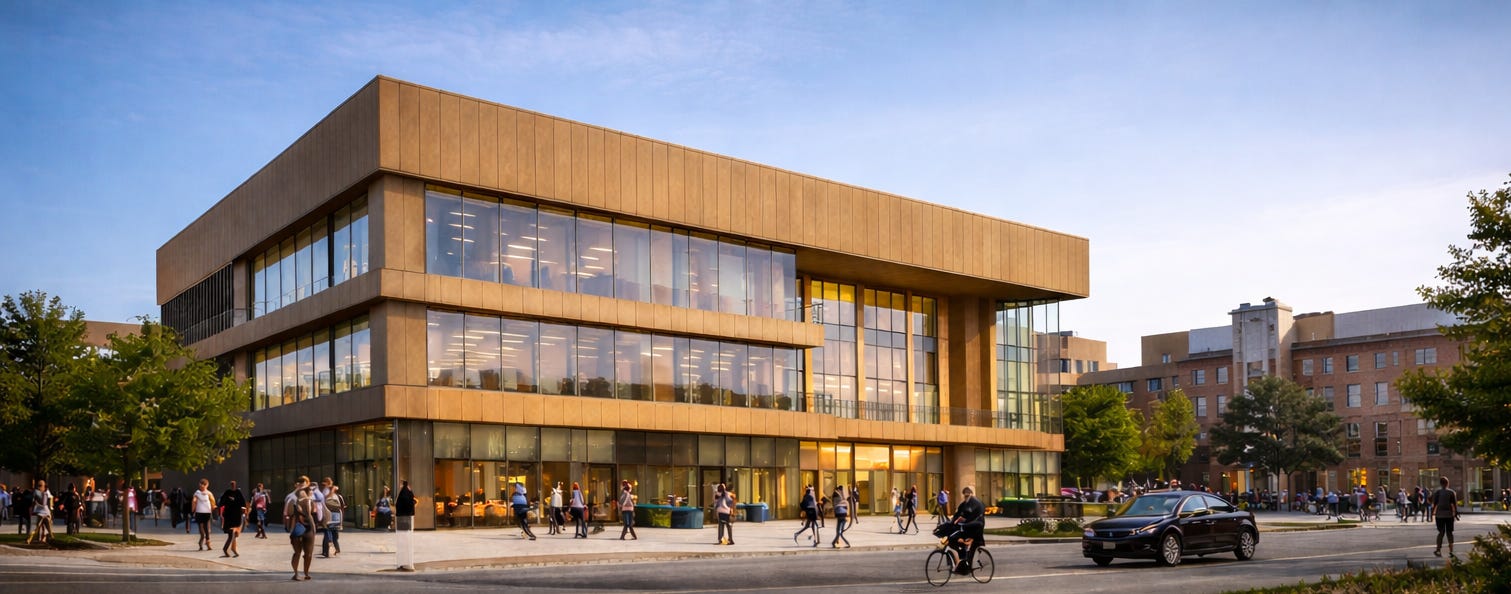
The 143,000-square-foot facility, backed by a $50 million lead gift from NVIDIA CEO Jen-Hsun Huang, will house advanced AI research infrastructure, including a powerful supercomputer. While university officials emphasize sustainability and innovation, some residents are asking how the project’s ethics and energy demands could ripple into the broader community.
Lori Mills is Huang’s wife, a philanthropist, and a graduate of Oregon State University.
One of the most tangible local concerns involves electricity use.
AI supercomputers require significant power and cooling. Although OSU has stated the building will reuse waste heat from computing systems to warm nearby campus buildings… and has long-term net-zero carbon goals… detailed public estimates of peak power consumption have not been widely discussed in city forums.
For local residents, the questions are practical. Could increased electrical demand affect regional grid capacity? Might utility infrastructure upgrades be required? Could those upgrades indirectly influence electricity rates over time?
Corvallis utilities operate within a broader regional system, but as AI infrastructure expands nationwide, communities are increasingly scrutinizing how energy-intensive research facilities intersect with local sustainability goals.
Another concern centers on housing.
If the complex succeeds in attracting high-paid researchers, engineers, and industry partners, some residents worry it could intensify housing demand in a city already grappling with affordability challenges.
Corvallis has faced tight rental vacancy rates and rising home prices over the past several years. While economic development can boost tax revenue and local spending, critics argue that without parallel housing expansion, new high-income jobs may contribute to upward pressure on rents and home values.
Beyond economics and utilities, some community members have raised concerns about governance and influence.
In online discussions, local residents have questioned whether naming a major public university building after a billionaire tech executive concentrates symbolic and institutional power in private hands. Is there adequate transparency around donor agreements?
Skeptics say the conversation should include community voices, particularly given the university’s outsized role in Corvallis’ economy and identity.
For local residents, the issue is less about national politics and more about civic balance: how much influence should any single donor have in a public institution that anchors the city?
The Huang Collaborative Innovation Complex may well elevate OSU’s national profile and bring a new opportunity to Corvallis. But for many residents, support for innovation is not incompatible with scrutiny.
As AI reshapes industries worldwide, communities hosting major computing infrastructure are beginning to ask grounded, local questions:
Who benefits directly?
Who bears indirect costs?
And how transparent are decision-making processes?
For Corvallis residents, the answers will likely determine whether the Huang Complex is seen primarily as a symbol of forward momentum… or as a reminder that growth, even in a college town, requires careful oversight and community engagement.

Do you have a story for The Inquirer? Email: editor@corvallisnow.com


→ Support us
We’ll keep it ad-free even if you don’t.

