
Editor’s Note: Dial-A-Bus provides very important services to our community and is a 501(c)3 registered non-profit. Public information is often buried. This is just an informative piece on Dial-A-Bus. We draw no conclusions… just posting as a dissemination of information for you to decide. It has come to our attention through multiple sources that not all this information is widely known in the community.
In Corvallis, transportation is more than just getting from point A to point B. For some families, it’s the difference between access and isolation. We’ll give some background on Dial-A-Bus before getting to the interesting parts.
Dial-A-Bus of Benton County has filled a critical gap in the community, providing specialized transportation for individuals who can’t rely on traditional systems. That includes seniors, people with disabilities, and increasingly, students who fall outside the reach of standard school bus routes. It’s a very important service.
As the Corvallis School District faces a growing budget shortfall, some questions (and not a lot of answers, due to non-itemized reporting) are emerging about how much is being spent on these services, and whether relationships behind the scenes deserve a closer look. We don’t know anything… but we took a closer look.
Melissa Harder, Assistant Superintendent of the Corvallis School District is married to Steven Harder, Executive Director of Dial-A-Bus.
The Corvallis School District’s budget used to itemize where each part of the transportation budget money went. It no longer seems to follow that itemization process.
What Dial-A-Bus Does, why it matters, and why it’s important to the community
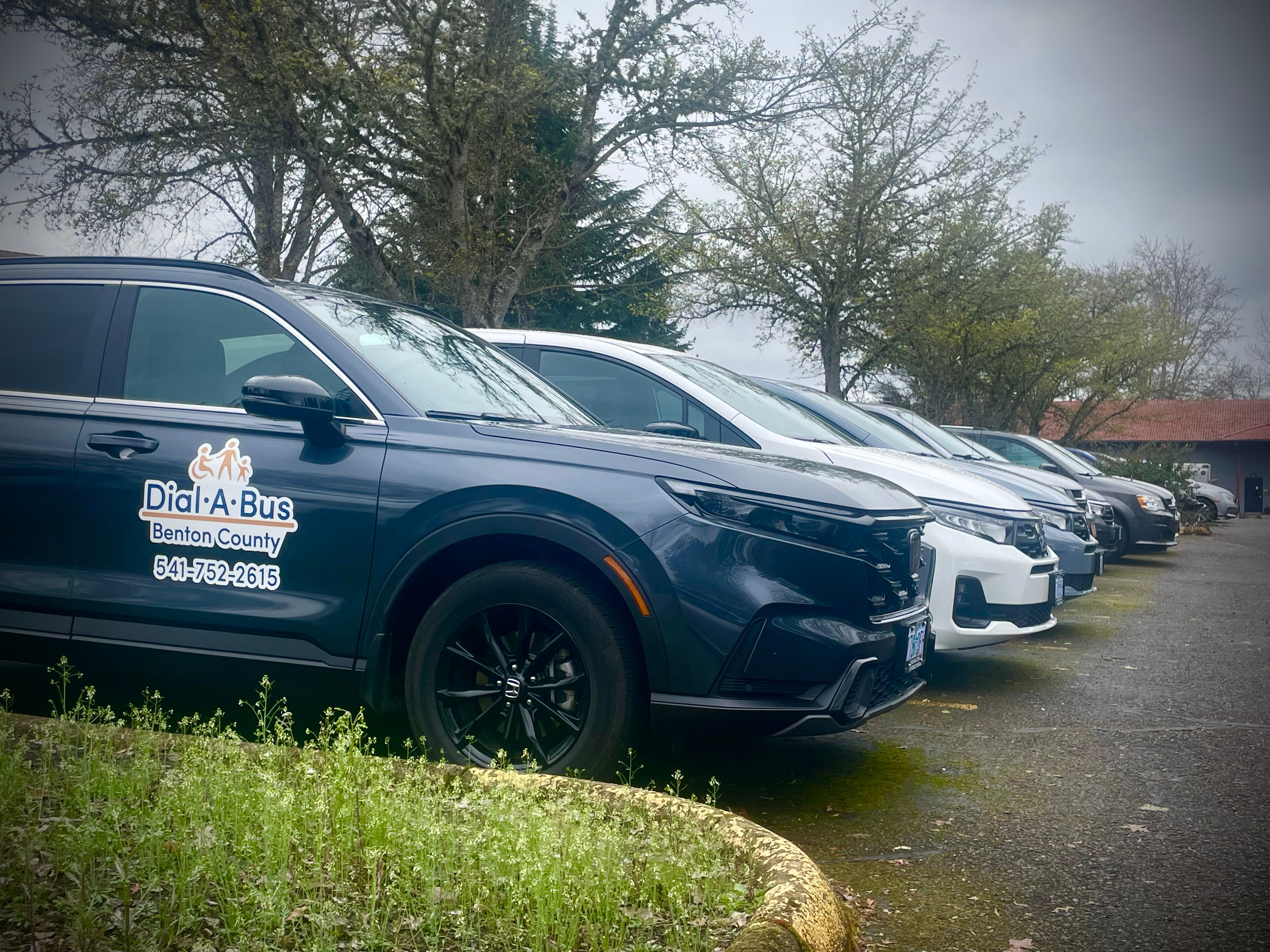
Dial-A-Bus of Benton County operates as a nonprofit transportation provider, 501(c)3 registered… offering door-to-door and specialized transit services across the region.
In recent years, its role has expanded within the Corvallis School District, particularly for students who cannot safely or effectively use traditional school buses.
That includes:
Students experiencing homelessness or housing instability
Foster youth navigating complex placements
Students with behavioral or developmental needs
Children whose circumstances make group transportation impractical
For these families, the service can be life-changing. Reliable, individualized transportation often means: consistent school attendance, greater stability during already difficult life situations, and reduced strain on families trying to navigate logistics.
Dial-A-Bus is not a luxury service… for some, it’s a lifeline.
This is where it gets interesting
Melissa Harder, Assistant Superintendent of the Corvallis School District, is married to Steven Harder, Executive Director of Dial-A-Bus.
There is no evidence of wrongdoing, and it’s a small town, so often things intertwine. Both organizations operate within formal structures and procurement processes. Dial-A-Bus went through a Request for Proposals (RFP) process to secure its role.
However, some community members have messaged us their concerns about perception and conflict of interest. What happens when two organizations with financial ties also have leadership connections?
Adding to the discussion, a past public video associated with Dial-A-Bus highlights support from school board member Chris Hawkins, who advocated for the service’s role in student transportation.
Again, advocacy for a needed service is not unusual, and options in Corvallis may be limited, but it does contribute to a broader conversation about how decisions are made and communicated.
We have an assistant superintendent, married to the executive director of a service, that is paid by the school district, that a member of the school board has advocated for.
This is where we lose you with some numbers
The Corvallis School District is currently facing an estimated $4 million budget shortfall.
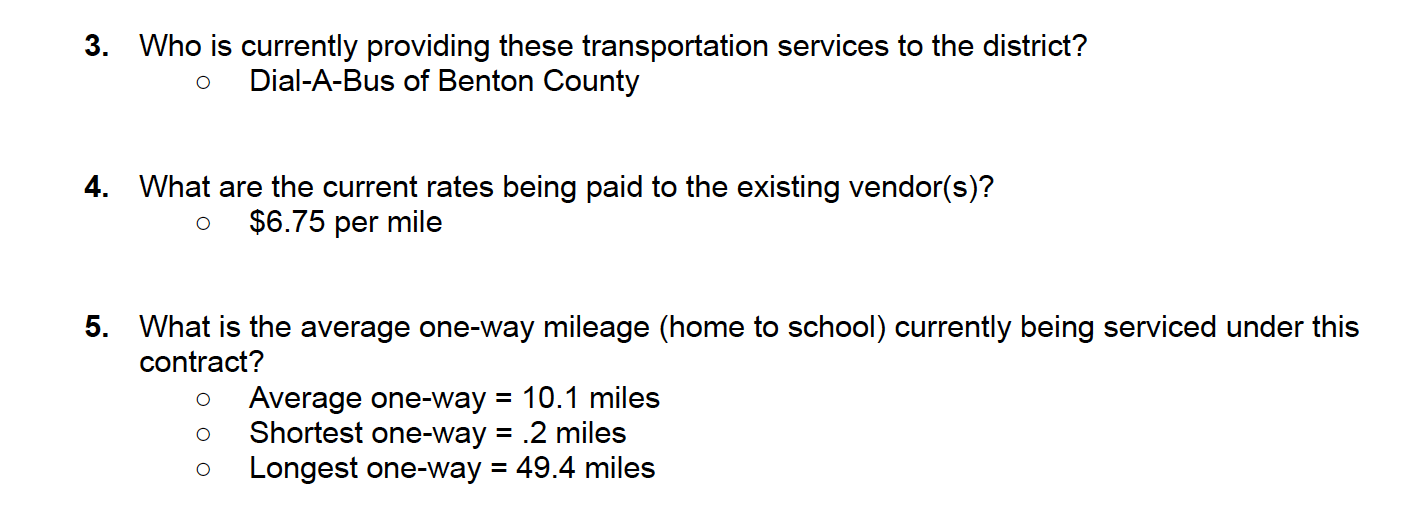
The district reportedly pays about $6.75 per mile for Dial-A-Bus services. Smaller buses (under 20 passengers, like Dial-A-Bus) nationally have lower per-mile reimbursement rates that vary between $1.70-$1.82 per mile. On Average.
An excerpt from the State of Oregon bid solicitation website (Oregon Buys; Bid Solicitation: S-P02509-00014183).
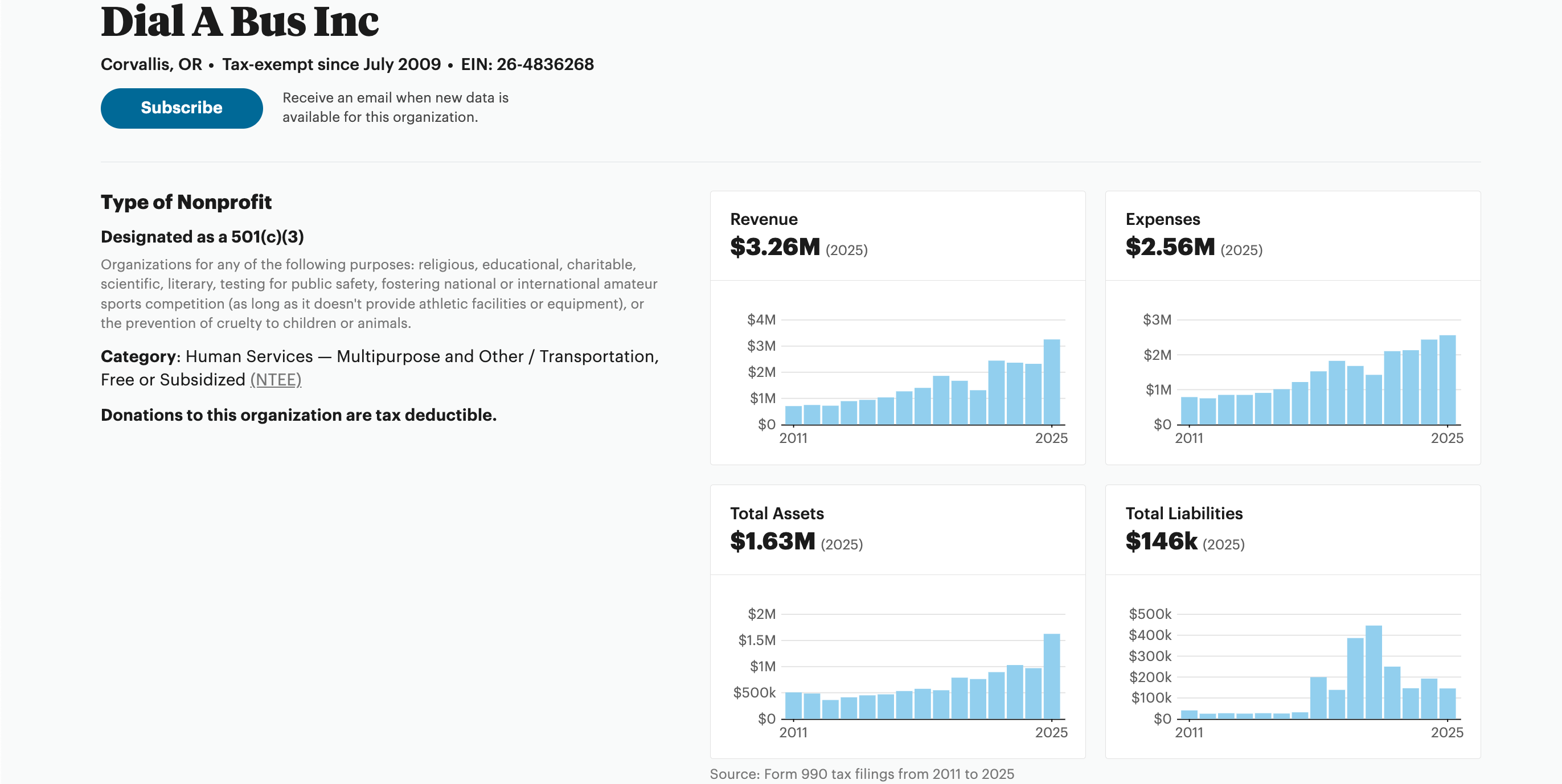
Dial-A-Bus revenue has increased from $1.6 million in 2021 to $3.26 million in 2025.
Dial-A-Bus total assets have increased from in $761,000 in 2021 to $1.63 million in 2025.
Steven Harder’s salary has increased from $104,253 in 2021 to $142,502 in 2025.
You can find Dial-A-Bus tax filings here (if you love going to an IRS website during tax filing season). Together, these numbers raise a natural question: How much is the district paying, and is it aligned with long-term financial sustainability?
If you take the longest one-way trip of 49.4 miles and multiply it by the $6.75 per mile charge. That ride equates to $333.45. The Average ride runs about $68.17, for 10.1 miles.
It should be noted that the average national salary increase has been 5.3% in this time frame. Which would bring Steven Harder’s salary in line with the increased amount. Almost to the dollar. While the salary increase falls within the national averages, the per-mile charge does not, even with added fuel, vehicle expenses, and increased labor costs.
A changing landscape
Historically, Dial-A-Bus primary contract has been tied to county transit services. Benton County is now exploring bringing its BAT (Benton Area Transit) service in-house, a move that could reshape Dial-A-Bus’s long-term funding structure. Hypothetically adding revenue dependence to the Corvallis School District.
At the same time:
Dial-A-Bus is not permitted to operate traditional school buses under Oregon Department of Education rules
Its niche remains specialized, individualized transport, often at a higher cost per ride
If its primary public contract shifts… will school district transportation become a larger share of its business?
Summation questions for readers, voters, and community members to decide (not us)
-Is there a conflict of interest here with the assistant superintendent of the Corvallis School District, being married to the Executive Director of Dial-A-Bus, who contracts with the schools?
-Has Dial-A-Bus spending had an effect on the Corvallis School District budget shortfall? How much of the spending is necessary for the important services Dial-A-Bus provides? Is Dial-A-Bus receiving the right compensation from the CSD for its services? Should it be more, should it be less?
-Competition decreases cost in consumer spending and pricing structures. Basic supply/demand price equilibrium. Was the RFP Process and contract awards fair to include other companies? Are there other companies to even include? Is there competition?
-The school district used to itemize the transportation budget, showing details of where the money went. Should they start doing that again?
-Transportation costs, vehicle costs, salaries have all risen over the years. Does Dial-A-Bus fall in line with these increased costs?
-Did Dial-A-Bus need to purchase new vehicles verse used or slightly used? Was the number of vehicles they purchased in line with service demand? With school closings?
-Should, or can, Corvallis School District transportation costs be cut, in order to decrease the budget shortfall? Would cuts affect important community services like Dial-A-Bus? Would those cuts affect users of Dial-A-Bus?
It’s on you to decide.
— The Corvallis Inquirer, March 24, 2026

We’d like to do a part 2 on this. With just reader comments or thoughts. Comments will be published anonymously and unfiltered. So please feel free to email any to editor@corvallisnow.com
Do you have a story for The Inquirer? Email: editor@corvallisnow.com

→ Support us
We’ll keep it ad-free even if you don’t.

